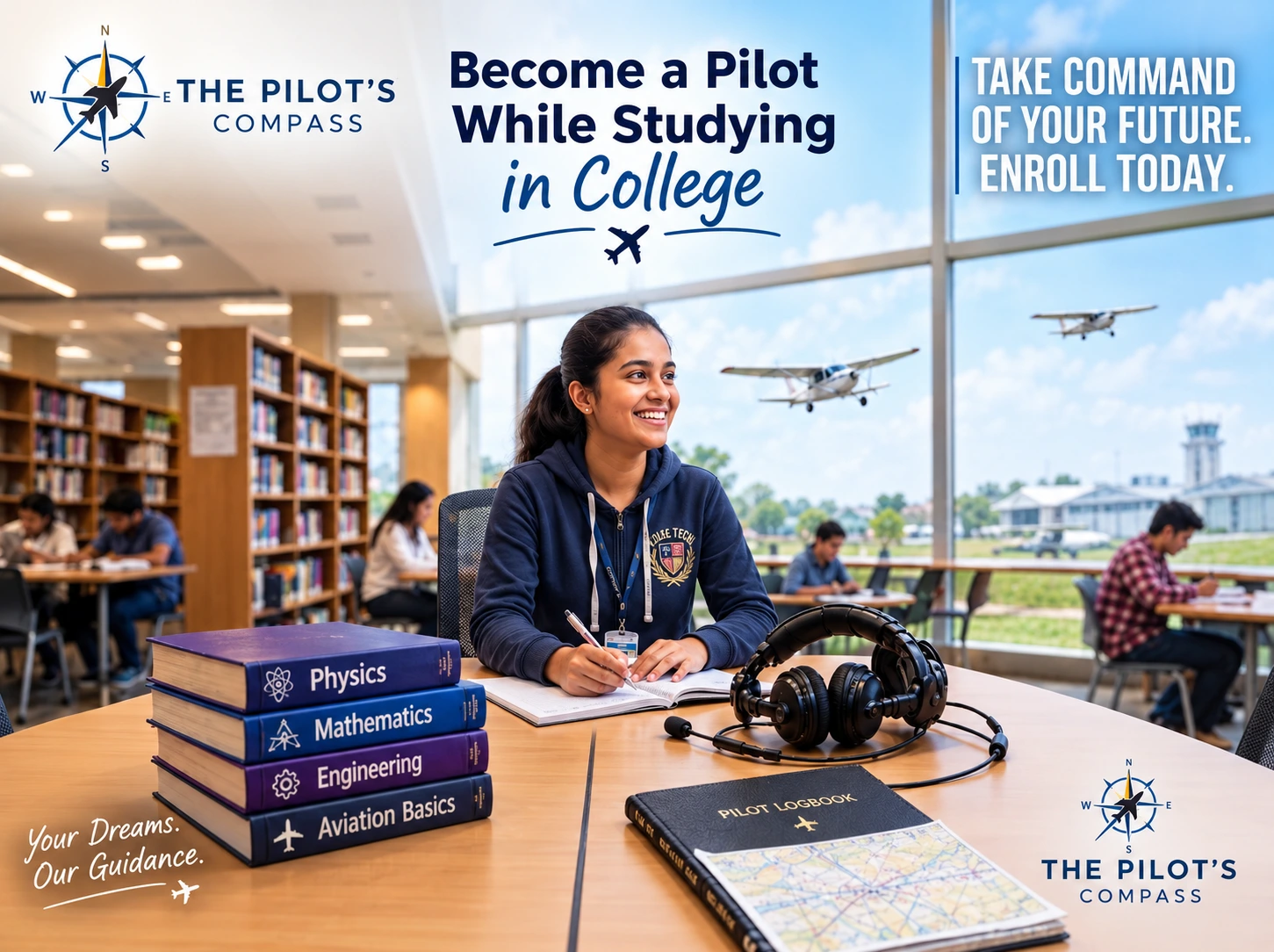
Yes, you can prepare for a pilot career while you study, but not every stage fits equally well.
The theory side (computer number, ground classes, DGCA exams) is realistic to complete during college. The medicals need careful timing. Flying training is the hard part to combine with a full-time degree, because 200 hours of flying needs regular, uninterrupted time.
The short version:
The best plan for most students is theory and medicals during college, flying after or during a planned break. Start paperwork early, match DGCA exam dates to your university timetable, and budget flying training before you enrol anywhere.
Key Takeaways
- Theory first, flying later: This is the most practical sequence for most college students.
- Start the paperwork early: Your computer number and Class 2 medical can be done in your first year.
- Check exam calendars: Compare the DGCA exam calendar against your university exam dates before you book any paper.
- Plan the Class 1 medical well ahead: Appointment lead times can be long.
- Money is the real constraint: Budget flying training and any loan before enrolling anywhere.
- Keep your degree on track: It is your backup plan and some programmes may prefer it.
Quick Navigation
- What Can and Cannot Run in Parallel
- The Four Realistic Pathways
- A Year-by-Year Roadmap
- Planning Your Weekly Time
- Planning the Medicals Around College
- Budget Considerations
- Risks to Manage
- Questions to Ask a Flying School Before You Enrol
- How The Pilot's Compass Helps You Study While in College
- Frequently Asked Questions
What Can and Cannot Run in Parallel
| Stage | Fits alongside a degree? | Why |
|---|---|---|
| Computer number and eGCA registration | Yes | Paperwork only. See our computer number guide |
| Class 2 medical | Yes | One or two visits, see the Class 2 guide |
| Ground classes | Yes | Evening live batches and recorded revision suit college schedules |
| DGCA theory exams | Yes, with planning | Computer-based, held in scheduled sessions, so match dates to your timetable |
| Initial Class 1 medical | Yes, with planning | Needs travel to a designated centre and may take two days. See the Class 1 guide |
| Flying training (200 hours) | Difficult | Needs regular sorties, depends on weather and aircraft, and often means relocating |
| Type rating and airline hiring | After CPL | Not relevant during college |
Our training process guide puts flight training to 200 hours at roughly 12 to 24 months for most students, which is why it rarely coexists with a full-time degree.
The Four Realistic Pathways
1. Theory and medicals during college, flying after graduation
You use the college years to finish paperwork, medicals and all theory papers, then start flying with no subject backlog. This is the lowest-risk path and the one we recommend most often. You save the months otherwise lost to ground school after joining a flying school.
2. Theory during college, flying in a planned gap or long break
You clear theory in years one to three, then take a structured break (or use a long vacation block) for the flying phase. This can work if your university allows breaks and your flying school offers flexible intake dates. Confirm the university's rules before you plan.
3. Parallel flying and degree
Possible only in specific situations: a flying school close to your campus, flexible weekend and vacation scheduling, an attendance policy you can meet, and enough time for study. Many students underestimate the weather and aircraft availability delays that stretch training. Ask for the school's written commitment on scheduling and check your university's attendance rules.
4. An aviation-focused degree programme
Some institutions run aviation-oriented degrees, and India has an aviation university at Amethi (Rajiv Gandhi National Aviation University) as described in a government reply in Parliament. Before choosing any programme, check whether the flying component is delivered by a DGCA-approved flying training organisation, what it costs, and whether the degree is recognised. A programme name alone does not tell you whether it leads to a CPL.
Our flying schools shortlisting guide and flying schools directory can help you compare options.
A Year-by-Year Roadmap
This is a template for a four-year degree. Adjust it to your course length.
| Year | Pilot-track goals | College priority |
|---|---|---|
| Year 1 | Confirm eligibility (10+2 with Physics and Mathematics). Apply for the computer number. Book the Class 2 medical and plan the initial Class 1 medical | Settle into your course and attendance routine |
| Year 2 | Join evening ground classes. Start with Air Navigation and Meteorology. Study through the year, and use semester breaks for revision | Keep grades steady |
| Year 3 | Sit your first DGCA papers in sessions that do not clash with university exams. Complete remaining papers | Plan project and internship work. Research flying schools and funding |
| Year 4 | Confirm medical validity, shortlist flying schools, and arrange scholarship and loan applications | Complete degree requirements |
| After graduation | Join flying training, with all theory already cleared | Degree completed as a backup |
If you are in your first year, our guide to becoming a pilot after 12th covers the early decisions.
Planning Your Weekly Time
A common weekly pattern for a student balancing both:
| Activity | Typical time |
|---|---|
| Live evening ground class (our batches usually run 7:30 PM to 9:30 PM IST) | 2 hours, 3 to 5 days a week |
| Self-study and practice problems | 4 to 6 hours spread across the week |
| Weekend revision block | 3 to 4 hours |
| Mock tests (closer to the exam) | One per week |
That is roughly 13 to 20 hours a week. At that pace, theory preparation takes longer than the 4 to 6 months typical for full-time candidates, so plan on the order of 6 to 9 months to cover the syllabus once, then a dedicated revision window using our exam preparation guide. These are editorial estimates and will vary by person.
Mixing college and pilot study works best when you protect two things: fixed study slots, and one rest day a week.
Planning the Medicals Around College
- Class 2 early. It tells you early whether you meet basic standards, and it is usually done with an empanelled civil examiner.
- Class 1 with lead time. Initial Class 1 examinations are done at designated centres. Our guide notes that initial wait times at Air Force centres can run for several months, so book according to your plan rather than waiting for graduation.
- Check validity. DGCA revised medical guidelines in 2025, including renewal intervals. Confirm the current validity on the official DGCA website so you do not let an assessment lapse before you start flying.
- Time the travel. The initial Class 1 evaluation can take two days. Schedule it in a break.
If you have a vision or health concern, find out early. See Can Pilots Wear Glasses? and our Class 1 medical guide.
Budget Considerations
Studying and preparing at the same time means two sets of costs. Use the ranges in our guides as a starting point and get written quotes.
| Item | Guide range or fact |
|---|---|
| College fees | Your own programme costs |
| Ground school plus DGCA theory papers | Our real CPL cost guide lists ₹1.5 to ₹3 lakh |
| DGCA exam fee | ₹2,500 per paper in regular sessions, ₹5,000 in OLODE, see DGCA exam fees |
| Class 2 medical | Typically ₹3,500 to ₹5,000 per our Class 2 guide |
| Class 1 medical | Typically ₹5,000 to ₹7,000 per our Class 1 guide, plus travel and stay |
| Flying training (200 hours in India) | ₹55 to ₹75 lakh at many private schools; compare each school's current itemised quote |
| Fully loaded pathway | The same guide puts the complete route, including ratings and type rating, at roughly ₹60 lakh to ₹1 crore |
Funding plans to think through now:
- Education loans. Some lenders disburse in stages and have conditions, so read our CPL education loans guide.
- Scholarships. Browse pilot scholarships in India early, because application windows are fixed.
- Parallel spending. Do not pay large non-refundable fees to a flying school while you are still years from starting. Pay for ground classes and exams now, and keep flight fees for when your start date is firm.
Risks to Manage
- Exam clashes. Compare the DGCA exam calendar on the Pariksha portal with your university schedule early in each semester.
- Attendance shortfalls. Many universities set minimum attendance. Check your own rule before you commit evenings and travel.
- Burnout. Two heavy workloads need planned rest, especially before university exams.
- Validity windows. Subject passes and medical assessments have validity periods. Our passing marks guide notes a rolling five-year validity for theory passes under current rules, but verify it before you plan a long gap.
- Drift. The longer the gap between theory and flying, the more revision you will need. Keep a light revision habit.
- Choosing a school too early. Flying schools change fees, fleets and schedules. Shortlist in year three or four, not year one.
Questions to Ask a Flying School Before You Enrol
- What is the student-to-aircraft ratio, and how many flying days did students get last year?
- Can I train in a part-time or vacation-block format, and is that scheduling guaranteed in writing?
- What is included in the headline fee? Are instrument rating, multi-engine rating, exam fees, simulator hours and accommodation included?
- What happens if training is delayed by weather or aircraft availability?
- Does the fee quote exclude taxes? Some quotes are published as "plus taxes".
- What are the refund terms if I stop, or if my Class 1 medical result is not favourable?
How The Pilot's Compass Helps You Study While in College
Combining college with pilot theory works best with a clear structure. At The Pilot's Compass, Commander Naveen Pandita (Retd.) and our IAF Qualified Flying Instructors run live evening batches (7:30 PM to 9:30 PM IST) so you can attend lectures in the daytime and focus on DGCA theory afterwards.
- Live interactive online classes in the evening.
- Recorded lectures for revision around your exam timetable.
- Doubt-solving sessions on Air Navigation and Meteorology.
- DGCA-style CBT mock tests.
- Guidance on computer number, Class 2 medical and exam planning.
Clear your theory papers during college and reach flight school without subject backlogs. Explore our DGCA CPL Ground Classes Program Page or book a counselling session.
Frequently Asked Questions
Will a degree make my pilot application stronger? DGCA's licence requirement is 10+2 with Physics and Mathematics, and airlines and cadet programmes publish their own criteria. A degree is mainly valuable as a backup and may matter for particular programmes.
Is online ground school good enough while in college? Live online classes with recorded revision are well suited to students, because they remove commute time and let you study around lectures. See Best Online DGCA Ground Classes in India.
What if I fail a paper during exam season? DGCA's rules let you retake individual subjects in later sessions. See DGCA passing marks and retake rules.
Continue Reading
- How to Become a Pilot in India
- DGCA Pilot Training Process Explained
- Commercial Pilot Training Hidden Costs in India
- Best Flying Schools in India by Budget
- Why Aspiring CPL Pilots Drop Out (And How to Avoid It)
Planning your pilot journey alongside college? Join evening live DGCA ground classes or book a free counselling session to map your semesters, medicals and budget.
Official Sources & References
- Directorate General of Civil Aviation (DGCA) Portal: https://www.dgca.gov.in
- DGCA Pariksha Portal: https://pariksha.dgca.gov.in
- DGCA Pariksha: Registration FAQs
Timelines and weekly-hours estimates in this article are editorial guidance. DGCA requirements, fees and validity periods can change, so verify them directly on the official DGCA website.
Frequently Asked Questions
Map Your Custom Pilot Training Pathway
Evaluate your compliance across the 4 major DGCA training gates, select training country routes (India vs. USA/Europe), and estimate your CPL timeline month-by-month.