Aviation Programmes
for Schools
Three programmes for Grades 7 to 12 — taught live by real pilots, led by a naval aviator and airline captain.
Taught by Real Pilots
Naval & airline captains
Live & Interactive
Real-time sessions
NEP 2020 Aligned
Experiential learning
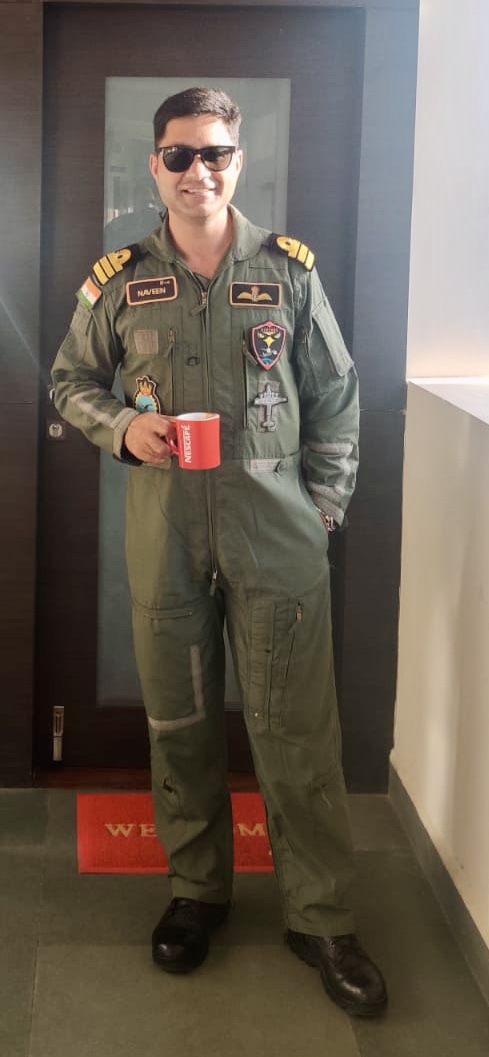
CDR NAVEEN PANDITA (retd)
Naval Aviator · Airline Captain · Lead Instructor
Flew 4 aircraft types in service · Commanded a frontline squadron
What’s in it for your school
Why schools choose The Pilot’s Compass
Seven reasons a principal can act on — before we say a word about the aviation industry.
Future-ready career awareness
Students meet a real industry and a real pathway, not a generic aptitude quiz.
NEP 2020 experiential learning
Career exposure and learning-by-doing, documented for your NEP reporting.
STEM with real-world application
Physics and maths taught through flight — reinforcing your own syllabus.
Delivered by practising pilots
Led by a naval aviator and airline captain, not a franchise trainer.
No infrastructure investment
No aircraft, no lab, no capex, no new appointments. One slot in your calendar.
Parent engagement included
We run the parent sessions for you — a visible, high-value school event.
Certificate programme
Every student finishes with a certificate and a written progress note.
The Short Version
A differentiated, career-linked stream your neighbouring schools cannot copy — and it costs you a room and a slot.
Trusted by Premier Schools & Colleges Across India
Real classrooms, real students, and direct mentorship from naval aviator and airline captain Cdr Naveen Pandita (Retd).
Ready to inspire future aviators at your campus?
We deliver keynote career sessions, full curriculum integrations, and live interactive workshops.
The Value Proposition
One programme, three people it has to satisfy
An enrichment programme only survives if the school, the student and the parent can each name what they got.
The school gets
- A career-linked stream that differentiates you at admissions
- NEP-aligned career exposure and experiential learning, documented
- Zero capex, zero new hires — one slot in the timetable
- Termly progress reports and a year-end showcase
- Parent engagement sessions we run on your behalf
The student gets
- A clear map of how to actually become a pilot — civil and military
- Physics and maths reinforced through real flight applications
- Early exposure to CPSS, COMPASS and ADAPT aptitude testing
- Mentorship from a practising pilot, not a counsellor
- A certificate and a written personal next step
The parent gets
- An honest picture of cost, timeline and eligibility before committing
- Confidence the Class 10 stream choice is made correctly
- Direct access to a Navy commander at parent sessions
- A progress note on their own child, every term
- Value on any STEM path — not only if the child flies
The problem inside every school
One choice at Class 10 quietly decides who can fly at all.
Takes Physics + Maths
Both doors stay open
- Civil pilot (DGCA) — eligible
- Air Force / Navy flying (NDA) — eligible
- Engineering and every STEM path — open
Skips Physics or Maths
Military closes; civil takes a costly detour
- Air Force / Navy flying — not possible
- Civil pilot — only via a lengthy NIOS route
- Adding Physics & Maths later costs years and money
The decision is made at fifteen, and it is close to irreversible. Our programmes reach students while the aspiration is still forming — and make sure the right call gets made on time. Parents come to the school for this guidance; most schools have no in-house expert to send them to.
The opportunity behind it
India needs 30,000+ pilots this decade — and can’t train them fast enough
The demand your students would be walking into is real, funded and government-backed.
30,000+
pilots India needs over the next decade — the government’s own estimate (AAI: 30,000–31,800).
₹28,840 cr
Modified UDAN — a ten-year push building 100 new regional airports (FY27–FY36).
160+ airports
up from 74 in 2014, heading toward 350–400. India is the third-largest domestic market.
₹820 cr
the Adani group’s move into FSTC — India’s biggest houses now back pilot training.
Why this matters to a school: a genuine, growing career your students can name — with entry routes that begin with subject choices you already teach.
Sources: Ministry of Civil Aviation / AAI · CAPA India · Adani Enterprises release (Nov 2025) · press reports, 2025–26.
The Student Journey
One pathway, from Grade 7 to a cockpit
The three programmes are stages of a single journey, not three separate products. A school can join at any stage.
Young Aviators
Aspiration + the stream decision
Career Awareness
The full map of aviation careers
Foundation
Exam and selection readiness
Flying school
Flying school · NDA · airline cadet
At 12–13
The idea becomes real. Aviation turns science and maths into something a child wants to be good at.
At 15
The stream decision is made with full information — the single most consequential moment in the journey.
At 16–18
Ambition becomes readiness: the maths, physics, radio-telephony and aptitude that selection actually tests.
At 18+
The student arrives at flying school or an SSB already prepared, rather than discovering the gaps there.
Most schools start at one stage and add the next the following session. A Grade 9 cohort today is your Foundation cohort in two years.
Choose your entry point
Three programmes. One partner. Grades 7 to 12.
Young Aviators | Aviation Career Awareness | Foundation Programme | |
|---|---|---|---|
| Who it’s for | Grades 7–10 two age-tuned tracks | Classes 11–12 whole cohort | Classes 11–12 and graduates |
| Length | 12 months 12 sessions × 90 min | One term 6 sessions × 90 min | 12 months 48 sessions × 2 hours |
| Mode | Live online fortnightly | Session 1 on campus 5 live online | Live online weekly |
| What it covers | Why things fly, maps and navigation, aircraft systems, aptitude games and hands-on builds — plus the Class 10 stream decision, made with eyes open. | The full career landscape: pilots and cabin crew, engineering and MRO, air traffic control, aviation business and the drone economy — with entry routes for each. | The academic base for a flying career: maths, physics of flight, navigation, radio-telephony, chemistry and pilot aptitude — for the civil or the military route. |
| Fee | On request | On request | On request |
- Who it’s for
- Grades 7–10 (two age-tuned tracks)
- Length
- 12 months (12 sessions × 90 min)
- Mode
- Live online (fortnightly)
- What it covers
- Why things fly, maps and navigation, aircraft systems, aptitude games and hands-on builds — plus the Class 10 stream decision, made with eyes open.
- Who it’s for
- Classes 11–12 (whole cohort)
- Length
- One term (6 sessions × 90 min)
- Mode
- Session 1 on campus (5 live online)
- What it covers
- The full career landscape: pilots and cabin crew, engineering and MRO, air traffic control, aviation business and the drone economy — with entry routes for each.
- Who it’s for
- Classes 11–12 (and graduates)
- Length
- 12 months (48 sessions × 2 hours)
- Mode
- Live online (weekly)
- What it covers
- The academic base for a flying career: maths, physics of flight, navigation, radio-telephony, chemistry and pilot aptitude — for the civil or the military route.
Discounted school rates apply to every programme. Young Aviators requires a minimum cohort of 20 students. Programmes can run side by side across different year groups.
Programme 01 · Grades 7–10
Young Aviators
12 sessions · 90 minAn aviation-career head-start, taught live by a real pilot. Two age-tuned tracks run in parallel — wonder and foundations for the juniors, rigour and the stream decision for the seniors.
Track A · Grades 7–8
Junior Wings — why the world flies
Why things fly
Four forces through paper planes, kites and balloons — plus the Wrights, HAL and the IAF.
The sky & the Earth
Maps, latitude and longitude, time zones and the compass — live on Google Earth.
Numbers & machines
Mental maths the pilot way, parts of an aircraft, planes, drones and rockets.
People & language
Aviation careers, weather, the phonetic alphabet, clear speaking and a mini fly-off.
Track B · Grades 9–10
Senior Wings — the making of a pilot
The physics of flight
Aerodynamics tied straight to Class 9–10 science — pressure, Newton's laws, lift.
Maths of navigation
A gentle trigonometry and wind-triangle preview — maths with a cockpit reason.
The two paths
Civil (DGCA) vs military (NDA), medicals, and why PCM in Class 11 matters.
Aptitude & selection
CPSS, COMPASS and ADAPT introduced, spatial training, and a capstone flight plan.
Online, but hands-on by design: near-zero-cost home builds, free flight-sim and phone missions, and a year-end showcase the school can put in front of parents.
STAGE 02 · CLASSES 11–12 · 6 SESSIONS × 90 MIN
Aviation Career Awareness
Most students believe aviation means becoming a pilot. In six sessions an entire cohort discovers the five families of aviation careers — and the subjects, courses and licences that lead into each.
The Big Picture
The aviation boom and the career landscape — why the growth is real, and close to home.
The Flying Roles
Pilots and cabin crew: the CPL pathway, medicals, subjects, and the true cost and timeline.
The Engineers
Aerospace engineering, AME and MRO — licensed, hands-on careers with a long runway.
Guiding the Skies
Air traffic control and airport operations, and the AAI recruitment route into them.
The Business of the Sky
Airline and airport management, cargo and logistics, and aviation data, AI and cyber roles.
Drones & What's Next
Drones and the RPAS economy, emerging roles, and a personal action plan for every student.
Session 1 is delivered on campus; the remaining five run live online. Story-led and interactive, with live polls and Q&A throughout, and an optional certificate of participation.
STAGE 03 · CLASSES 11–12 · 48 SESSIONS × 2 HOURS
Foundation Programme
One academic foundation, two flying careers. A full year — 48 live classes, 96 hours, four terms of rising difficulty — building the base that DGCA ground exams and defence selection both assume a student already has.
Mathematics & numeracy
Speed–distance–time, geometry and trigonometry — the arithmetic of flight planning.
Physics of flight
Forces, motion, pressure and lift — why an aircraft flies and how it is controlled.
Navigation, Earth & geography
Latitude and longitude, charts, the wind triangle and world time.
Communication & RTR(A)
ICAO phraseology, readback discipline and the DGCA radio-telephony exam.
Reasoning & pilot aptitude
Spatial, numerical and verbal reasoning for CPSS, COMPASS and ADAPT.
Chemistry
The atmosphere, aviation fuels and materials — engines, altitude and safety.
Four terms of twelve Saturdays
Term 1
Orientation & on-ramp
Term 2
Navigation, time & motion
Term 3
The physics of flight
Term 4
Skies, selection & capstone
Every Foundation enrolment includes
Two perks no other programme can offer
30% off DGCA ground classes
A standing discount into The Pilot’s Compass DGCA ground school — the natural next step on the civil path, at a real saving for the family.
A free 3-hour aptitude session
Military track: a real CPSS (IAF) station. Civil track: COMPASS or ADAPT. Experience most aspirants never get until the day it counts.
Plus, with every seat
Recorded library
Every class recorded — revise any topic, any time.
Workbooks & quizzes
Term workbooks and between-class practice packs.
Mentorship & clinics
Guidance from a Navy commander and airline pilot.
Civil + military, one seat
One programme prepares a student for both routes.
Why us
Why not just a career counsellor?
A flying career is not decided by an aptitude questionnaire. It is decided by subject choices, regulator exams, medicals and a selection board — by someone who has been through all of them.
The only programme in India where students learn from one person who has been all five
Naval aviator
Flew four aircraft types in service
Airline captain
Line pilot, ex-Akasa Air
DGCA-route expert
Sat and passed the ground exams
Selection mentor
NDA, CDS, AFCAT and SSB
Airline insider
Knows how carriers screen and hire
| Career counsellor | Aeromodelling / tinkering club | The Pilot’s Compass | |
|---|---|---|---|
| Taught by a practising pilot | |||
| Covers both civil (DGCA) and military routes | — | ||
| Current with DGCA / eGCA rules | — | ||
| Prepares for pilot aptitude screening | |||
| Protects the Class 10 stream decision | — | ||
| Reinforces school science and maths | — |
Key: yes · partial (—) · no. Assessed against what each option typically offers an aviation aspirant in an Indian school.
Policy alignment
A programme a principal can point to under NEP 2020
Career exposure from Grade 6
NEP mandates early career and vocational exposure. This delivers exactly that, from a real practitioner rather than a textbook.
Experiential, not theoretical
Learning by doing is central to NEP. Every session pairs a concept with a hands-on challenge or a live demonstration.
No academic / co-curricular wall
NEP dissolves that divide. The senior tracks reinforce Class 9–12 physics and maths through flight, rather than competing with them.
A real-world role model
NEP encourages students to meet practitioners. Few schools can put a Navy commander and airline captain in front of a class.
Documented for your reporting: we provide attendance, session records, student certificates and a cohort report you can attach to your NEP and CBSE activity documentation.
Outcomes
What we measure — and what your school receives
Every cohort is measured at the start and at the end, so the programme’s value is a number you can take to your board and to parents.
Aptitude shift
A spatial and numerical reasoning baseline in session 1, repeated at the end. You receive the cohort’s movement.
Stream-choice clarity
Can the student state the subject requirement for DGCA and NDA entry? Measured before and after.
Career-map recall
Can they name three aviation careers beyond pilot, and the entry route for one? Measured before and after.
Attendance & completion
Session-by-session attendance and the certificate completion rate for the cohort.
Parent engagement
Turnout at parent sessions and a short satisfaction score from families.
Progression
How many students continue into the next stage of the pathway — the clearest signal of real value.
The partnership
We bring the programme. You bring the room.
The Pilot’s Compass provides
Real pilots as instructors
Led by Cdr Naveen Pandita — the same standard in every session.
Curriculum & materials
Branded session decks, handouts, workbooks and challenge packs.
Recordings & practice
Session recordings and between-class practice for every student.
Certificates & progress notes
A certificate for each student and a short progress note for parents.
Parent-facing collateral
Brochures, an orientation session and a year-end showcase you can host.
The school provides
One slot in the calendar
90 minutes fortnightly, or a weekly Saturday class for the Foundation.
A room with a screen
Projector or smart board, speakers and a stable connection.
A supervising teacher
One staff member to run the room — no subject expertise needed.
Help with enrolment
Circulating the programme to parents and hosting the launch session.
Attendance & feedback
Your existing systems — we plug into whatever you already use.
No aircraft, no lab, no capex and no new appointments — online delivery means every branch gets the same instructor.
Fees & Commercials
Pricing on request
Discounted school rates
Every programme is priced per student, at a school rate
Tell us the year groups and rough numbers you have in mind and we will send a written quote the same week — along with the founding-partner rate if yours is the first school we work with in your city.
How schools usually structure it
Added to school fees
The school collects with term fees and remits — one small line item for families, not a lump sum.
Parents pay directly
We invoice families and handle collection; the school simply hosts the programme.
Chain-wide agreement
One contract covers every branch, at the same rate, with the same instructor.
Founding-partner rate. The first school we partner with in each city runs its opening cohort at a further reduced rate, in exchange for a testimonial and a case study.
Get started
From this conversation to first class in two weeks
A 30-minute call
We look at your year groups and calendar, and recommend one programme — not three.
A free masterclass
"How to become a pilot in India", delivered live to your students and parents. No obligation.
Confirm the cohort
Agree year groups and numbers, pick a slot, and we hand you the collateral for parents.
Classes begin
We start within two weeks of sign-off, and close the year with a showcase for parents.