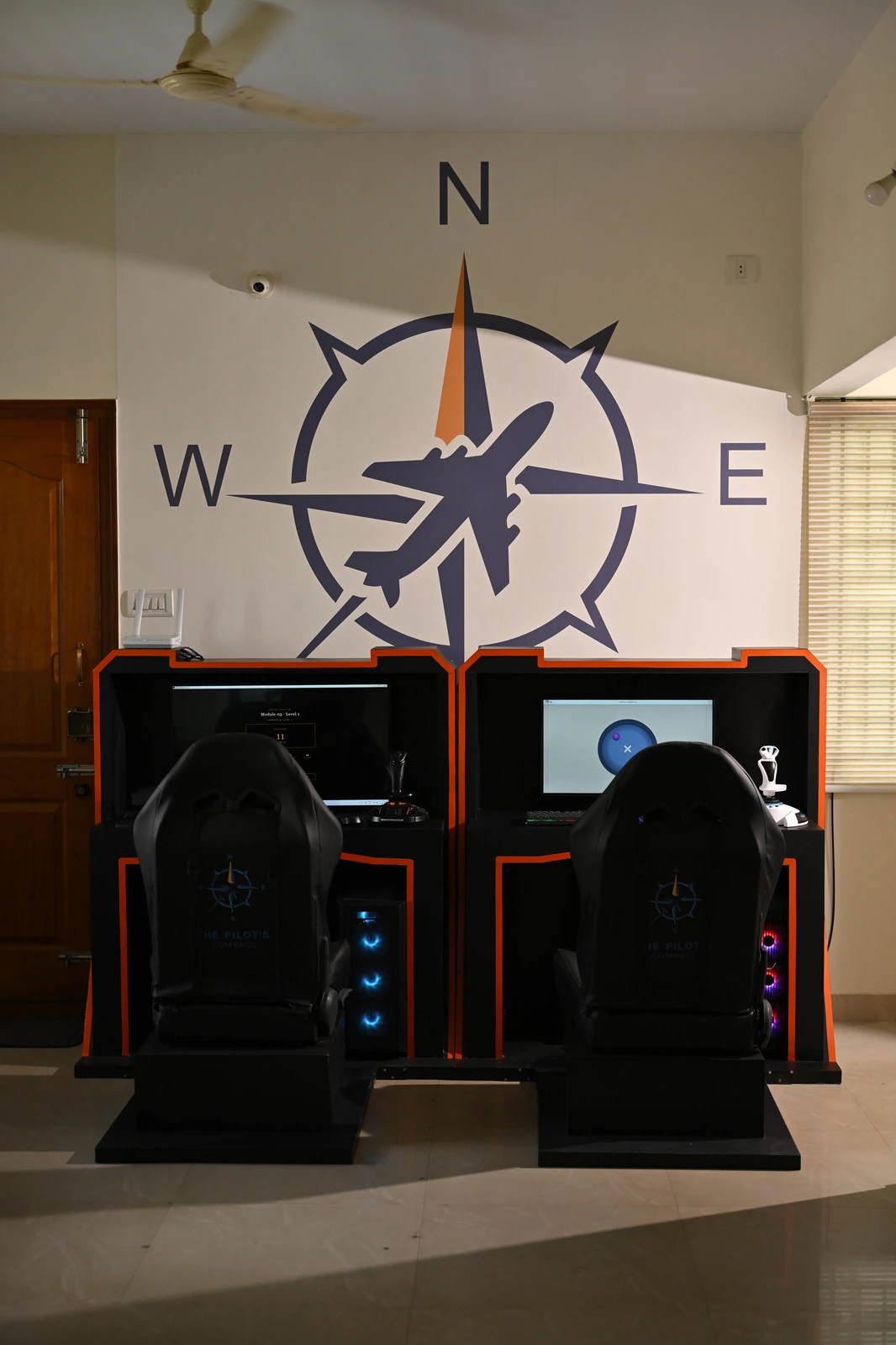
CPSS & ADAPT Simulator Training
Hands-on Psychomotor Preparation
No one cadet programme is best for everyone. The right one is the one whose written terms your family can complete: the fee, the timeline, the entry rules and what happens if something goes wrong.
The three India airline cadet programmes most families ask about are IndiGo, Air India and Akasa. They differ in three ways that matter: the cost you can see before applying, where you fly, and how strict the entry rules are. Akasa trains you at Indian schools for its Boeing 737 MAX fleet. IndiGo's Skyborne route and Air India's route send you to the USA for flight training, with an Airbus A320 type rating on the IndiGo route.
In short: a cadet programme is not automatically cheaper or faster than training conventionally. It trades flexibility for structure. You follow one airline's syllabus, train with its chosen school and pass its selection, and in return you get a defined pathway toward a First Officer seat, subject to performance and the airline's hiring.
Key takeaways
- Skyborne's IndiGo page shows applications open; Air India's 2026 listing shows the position filled; Akasa's page says applications are closed.
- Air India has the tightest entry rules: age 18 to 30, 60% in each core subject and a 158 cm minimum height.
- Akasa publishes an estimated ₹97.4 lakh to ₹1.06 crore. Skyborne's IndiGo route lists USD 132,000. Air India shows no total.
- Akasa trains you in India; the IndiGo (Skyborne) and Air India routes train you in the USA.
- None of the three guarantees a job. Bond, refund and failure terms sit inside the training agreement, so get them in writing.
Quick navigation
- Cadet programmes at a glance
- Who actually trains you
- IndiGo cadet pilot programme
- Air India cadet pilot programme
- Akasa Air SkyCadet programme
- Should you train in India or abroad?
- Contracts, bonds, refunds and failure
- Cadet vs conventional CPL
- How to choose in five questions
- Who these programmes are not for
- FAQs
Airline cadet programmes in India at a glance (October 2026)
Intake status changes without notice, so check each programme's page before you rely on it. The IndiGo column shows Skyborne's route; other IndiGo partners set their own rules and fees.
| IndiGo (Skyborne route) | Air India | Akasa SkyCadet | |
|---|---|---|---|
| Intake status | Skyborne's page shows applications open | 2026 listing shows the position filled | Akasa's page says applications are closed |
| Age | 18 to 40 on the first day of selection | 18 to 30 | 18 at application, up to 40 at enrolment |
| 12th marks | 51% in each of Physics, Maths and English | 60% overall and 60% in each of English, Maths and Physics (NIOS accepted) | 10+2 with Physics, Maths and English |
| Other entry rules | Valid passport and eligibility for a US M1 student visa; IELTS 5.5 or equal; BMI 18 to 25; DGCA Class 2 medical to sit Stage 1 | Indian citizen or OCI; minimum height 158 cm | Indian citizens only; written and spoken English; no criminal record |
| Selection | Assessment (GBP 250, non-refundable), then a three-stage selection | Screening, online assessment, personal interview | Aptitude tests, psychometric assessments, in-person interviews |
| Where you train | Delhi (ground classes), then Vero Beach, Florida, USA | India (ground school), then Phoenix, Arizona, USA | India (Bhavnagar or Jalgaon) |
| Published cost | USD 132,000, plus Delhi ground classes | Not shown on Air India's pages | Estimated ₹97.4 lakh to ₹1.06 crore |
| What the cost includes | Flying training, DGCA conversion, A320 type rating, self-catered housing, uniform, return flights | Ask for the written fee schedule | Accommodation, food and living expenses; medical tests, travel and personal costs extra |
| Pathway | First Officer, Airbus A320 | First Officer on Air India's fleet (type set by the airline) | First Officer, Boeing 737 MAX |
Not sure which one you qualify for? You can book a session with a mentor before you pay any assessment fee.
Who actually trains you
Cadet terms are set by each airline and its training school, so the school you train with changes your fee, your flying location and the detail of selection. School lists move between intakes, so confirm the current one with the airline before you pay.
| Airline | Training school | Where |
|---|---|---|
| IndiGo | Skyborne, one of IndiGo's partner academies. Confirm the current partner list with IndiGo before you apply. | Delhi, then Vero Beach, Florida, USA |
| Air India | AeroGuard Flight Training Center, named on AeroGuard's own page. A second US school is named in our Aon cut-e guide; confirm the current list on cadetpilot.airindia.com. | Phoenix, Arizona, USA |
| Akasa (SkyCadet) | Dunes Aviation Academy and Skynex Aero, listed on Akasa's SkyCadet page. | Bhavnagar and Jalgaon, India |
IndiGo cadet pilot programme
IndiGo trains cadets through partner academies, and each partner sets its own rules and fees. The details below are for Skyborne's route, taken from Skyborne's IndiGo page. Our IndiGo cadet deep-dive covers the programme stage by stage.
On Skyborne's route, you must be 18 to 40 on the first day of selection, with at least 51% in each of Physics, Mathematics and English in 10+2. You need a valid passport and must be eligible for a US M1 student visa. Skyborne also asks for IELTS 5.5 or equal and a BMI between 18 and 25, so check both before you pay the assessment fee. You need at least a DGCA Class 2 medical to sit Stage 1, and a DGCA Class 1 and a US FAA Class 1 medical before flight training starts.
Selection starts with a non-refundable assessment fee of GBP 250, followed by a three-stage process once your application is verified. For aptitude drills, see our ADAPT test preparation guide.
Training runs in four parts: 3 months of DGCA ground school in Delhi, 12 months of flying at Skyborne's academy in Vero Beach, Florida, 2 months of DGCA licence conversion, and 3 months of multi-crew cooperation and the A320 type rating. The route leads toward an Airbus A320 First Officer seat, subject to completing training and the airline's requirements.
Skyborne lists the course at USD 132,000, paid in five instalments of USD 26,400, and the first instalment is non-refundable. It covers flying training for the FAA and DGCA licences, the DGCA conversion, the A320 type rating, self-catered housing, uniform, return flights and a refund of DGCA and FAA exam fees. The 3 months of ground classes in Delhi cost extra. Other IndiGo partners set their own fees.
This route suits a candidate who wants a clear A320 line, can train abroad and is within Skyborne's age cap.
Air India cadet pilot programme
Air India's cadet programme feeds a full-service carrier. Air India flies both narrow-body and wide-body aircraft, but a cadet's type and fleet are set by the airline and are not a wide-body guarantee.
To apply, you must be an Indian citizen or OCI aged 18 to 30, at least 158 cm tall, with 60% overall in 10+2 and 60% in each of English, Mathematics and Physics. NIOS certificates are accepted.
Selection has three phases: screening, an online assessment and a personal interview. Our Aon cut-e test preparation guide covers how to prepare.
AeroGuard's page sets out the training. Cadets do DGCA ground school and the written exams in India (our DGCA CPL ground classes cover this theory), then fly for 12 to 15 months in Phoenix, Arizona, for an FAA CPL with multi-engine and instrument ratings. They return to India for the DGCA conversion, the type rating and airline training. AeroGuard includes travel, housing and immigration help in its part.
Air India does not show a total cost on its pages, so ask for the written fee schedule before you compare it with the others.
Air India's 2026 listing now shows the position as filled. Check the official cadet site for the next window.
This programme suits a candidate drawn to a full-service carrier who can meet the 60%-per-subject and 158 cm bars, is 30 or under, and accepts that the fleet assignment is the airline's call.
Akasa Air SkyCadet programme
Akasa's SkyCadet route trains pilots for its all-Boeing 737 MAX fleet, at Indian training schools.
You must be an Indian citizen, at least 18 when you apply and no older than 40 when you enrol. You need 10+2 with Physics, Mathematics and English, written and spoken English, and no criminal record or history of disciplinary or legal action.
Selection uses aptitude tests, psychometric assessments and in-person interviews. If you are not selected, you can apply up to two times, at least 3 months apart.
Training runs at Dunes Aviation Academy in Bhavnagar or Skynex Aero in Jalgaon. Akasa says the CPL and type rating are completed within 24 months, and there is a final suitability assessment before induction.
Akasa estimates the cost at ₹97.4 lakh to ₹1.06 crore (subject to change), with accommodation, food and living expenses included. Medical tests, travel and personal costs are extra, and there is no stipend. The full fee schedule comes with the application form.
Akasa's SkyCadet page says applications are closed. Check akasaair.com for the next window.
This programme suits a candidate who wants a single-type 737 MAX pathway, wants to train in India, and values a wide age window.
Should you train in India or abroad?
Akasa trains you at Indian schools in Bhavnagar or Jalgaon, so you hold a DGCA CPL from the start. IndiGo's Skyborne route and Air India's route train you in the USA, so you also need a passport, a US student visa and a licence conversion when you come back. That adds paperwork and time, so ask how long the conversion takes and who pays if it runs late.
Contracts, bonds, refunds and failure
A cadet seat is a large commitment, so the contract decides as much of your risk as the fee does. Akasa publishes some of these terms: up to two applications, a training agreement that commits you to join Akasa, and refunds under the training school's policy. None of the three publishes a bond amount, so ask for it in writing.
A bond, a Letter of Intent, a non-refundable instalment and a training agreement are four different things, so ask for each one in writing. A Letter of Intent signals the airline's intent to train you; it is not an employment contract, and hiring can pause after training.
Before you pay anything, ask for:
- the full fee schedule in writing
- which payments are non-refundable, and when
- whether the type rating, ground classes and housing are included
- which school you will go to
- what the airline promises after training
- what happens if you fail a stage or pause for a medical reason
If any answer is only spoken, treat it as missing.
Cadet vs conventional CPL
A cadet programme is not automatically better than training conventionally and then applying to an airline. The two routes carry different risks.
A cadet route locks you to one airline's syllabus and school. A conventional CPL lets you choose your flying school, country and pace, and apply to any airline afterwards. Compare the cadet fee schedule line by line against a fully loaded conventional CPL with a type rating, which our real cost of CPL training in India guide breaks down.
A Letter of Intent signals the airline's intent to train you, a conditional offer depends on you clearing training, medicals and checks, and an employment contract is the actual job. Each airline sets its own aptitude assessment, so prepare for your chosen route's test, not a generic one.
We explain the structural limits of cadet routes in why cadet pilot programs fail in India.
How to choose in five questions
- Which fleet do you want? A320 for IndiGo, 737 MAX for Akasa, and Air India's mixed fleet, where the airline decides your type.
- What is your age? Air India caps at 30; Skyborne's IndiGo route and Akasa take candidates up to 40.
- Can you clear the subject bars? Air India wants 60% in each subject; Skyborne's IndiGo route wants 51% in each.
- Is your medical in order? A commercial licence needs a DGCA Class 1 medical, so settle it before you pay. See our DGCA Class 1 medical guide.
- Have you tested your aptitude? A supervised practice run, matched to your chosen route's test, tells you more than any brochure.
Who these programmes are not for
- Families who can pay the first instalment but not a delay, a repeat test or loan EMIs.
- Students without Physics and Maths in 12th who have not cleared them through NIOS.
- Anyone over 30 for Air India, or over 40 for IndiGo's Skyborne route or Akasa.
- Students who want to choose their airline after the CPL. A conventional CPL at a DGCA-approved flying school keeps that open.
- Anyone who has not done a Class 1 medical yet.
Find out where you stand first
Take the free pilot eligibility quiz. Then book a mentorship session to check your marks, age and medical against each programme before you pay any assessment fee. You can also message us on WhatsApp.
References
Last updated: 28 October 2026.
- Akasa Air SkyCadet Programme: eligibility, selection, training schools, estimated cost, inclusions and application status (FAQ section).
- Air India Cadet Pilot Program listing and cadetpilot.airindia.com: eligibility, selection phases and status.
- AeroGuard Air India Cadet Program: training school, location and training steps.
- Skyborne IndiGo Cadet Pilot Programme: eligibility, medicals, selection, timeline, course fee and inclusions.
- DGCA: Class 1 medical requirement for a commercial pilot licence.
Frequently Asked Questions
Map Your Custom Pilot Training Pathway
Evaluate your compliance across the 4 major DGCA training gates, select training country routes (India vs. USA/Europe), and estimate your CPL timeline month-by-month.