CPSS & ADAPT Simulator Training
Hands-on Psychomotor Preparation
ADAPT is the name commonly used for the computer-based aptitude and personality assessment that several IndiGo Cadet Pilot Programme partner academies use to screen cadet applicants before the interview stages. The exact product and its name are set by the partner academy and the intake, so the assessment you sit may carry a different name.
It assesses cognitive speed, spatial awareness, working memory, hand-eye-foot coordination and personality. You cannot memorise answers the way you would for a DGCA theory paper, but you can train the underlying skills and learn the test mechanics in advance.
This guide covers who qualifies, the selection stages, what the aptitude assessment covers, how to prepare, and what the pathway costs in 2026.
Reviewed by Commander Naveen Pandita (Retd), former Indian Navy warship commander and naval aviator. Figures are dated and sourced. Where a number depends on the airline or its training partner, we say so.
The short version: The IndiGo Cadet Pilot Programme is a self-funded route toward an A320 First Officer seat, not paid employment. You need 10+2 with Physics, Maths and English and a DGCA Class 1 medical, then you clear five selection stages, with the ADAPT aptitude test as the first scored screen. Budget roughly ₹90 lakh to ₹1.1 crore all-in for 2026, and confirm every figure with your chosen partner academy.
Key Takeaways
- The programme is self-funded, and completing it does not by itself guarantee a job.
- Training runs through IndiGo's approved partner academies, such as CAE (NFTI, Gondia) and Skyborne.
- Eligibility cutoffs (age, marks, medical) are set per partner and per intake.
- Selection runs in five stages; ADAPT is Stage 2, the first scored screen.
- ADAPT tests skills, not recall, so daily drills beat cramming.
- The full pathway, including the A320 type rating, costs roughly ₹90 lakh to ₹1.1 crore.
Quick Navigation
- What is the IndiGo Cadet Pilot Program?
- IndiGo cadet eligibility (2026)
- The 5-stage selection process
- What does the ADAPT test assess?
- How to prepare for the ADAPT test
- What the pathway costs (2026)
- Is the IndiGo cadet program right for you?
- Common mistakes that fail cadet applicants
- FAQs
What Is the IndiGo Cadet Pilot Program?
The IndiGo Cadet Pilot Programme is an airline-linked, self-funded cadet pathway. It is built to take a candidate with no prior flying experience toward a First Officer role on the Airbus A320.
It is a self-funded training pathway rather than paid employment, and completing it does not by itself secure a job: a Letter of Intent and eventual placement stay subject to performance, medical fitness, licensing and the airline's hiring demand at the time.
Training runs through IndiGo's approved partner academies; publicly named partners have included CAE (NFTI, Gondia) and Skyborne. Selection is competitive and merit-based.
As of 2026 the current partner list, intake windows and any service-bond terms are set by IndiGo and vary by intake, not by us. Published programme structures describe the pathway as self-funded with no traditional bond; confirm the current partner academies and any bond or Letter-of-Intent conditions directly with IndiGo or the named partner before you pay any fee.
IndiGo Cadet Eligibility (2026)
Check these before you apply. The figures below are typical across current IndiGo partner intakes, not a single universal standard: each partner academy (for example CAE at NFTI Gondia or Skyborne) sets its own exact cutoffs per intake, so treat this as a starting checklist and confirm the precise set for your chosen partner.
| Requirement | Typical 2026 criteria |
|---|---|
| Age | 18 to about 35–40, depending on the partner intake (confirm the exact cap with your chosen partner) |
| Academics | 10+2 with Physics, Maths and English; often a minimum of 51% in each |
| Medical | DGCA Class 1 required before flight training; some pathways also need an FAA Class 1 |
| English | Fluent; IELTS 5.5 or equivalent on international pathways |
| Nationality | Indian national or OCI, per the partner pathway |
Assumption: criteria as published by IndiGo partner academies, 2026. Verify the exact cutoff with your chosen partner before you pay any fee.
Get your DGCA Class 2 medical first. Move to Class 1 early. An unexpected medical finding can end a cadet application regardless of your aptitude score, so clear the medical before you invest in the rest. See our DGCA Class 1 medical guide and CPL eligibility after 12th.
The 5-Stage IndiGo Cadet Selection Process
Selection is a funnel. Each stage removes candidates. Here is the sequence.
| Stage | Name | What is assessed |
|---|---|---|
| 1 | Application & screening | Age, 10+2 marks, medical eligibility |
| 2 | ADAPT aptitude assessment | Mental math, spatial awareness, memory, tracking, personality |
| 3 | Group Activity (GA) | Crew teamwork, listening, calm reasoning |
| 4 | Personal Interview (PI) | Motivation, basic aerodynamics, honest self-awareness |
| 5 | Letter of Intent (LOI) | Formal cadet offer and induction into the partner FTO |
Some intakes run the Group Activity and Personal Interview together and label the combined round GAPI, so you may also see this pathway described as three rounds (ADAPT, GAPI, then the Letter of Intent).
The aptitude assessment is Stage 2, the first scored screen before the human-assessed stages. Public pass-rate data for this specific programme is not published, so treat any claim that "most applicants fail here" as anecdotal rather than a measured figure.
Fees, Retakes and Refunds
The aptitude-test application fee is reported at about ₹29,500 as of October 2026; that figure comes from public reporting rather than a primary IndiGo page, so check the current amount on your partner's live application.
Candidates who do not clear a stage generally face a cooling-off period before re-applying, and the length of that wait, along with any refund of course fees if you exit or are not placed after a later stage, is set by the partner academy and varies by intake. Get the retake window, refund terms and any cancellation charges in writing from your chosen partner before you pay.
What Does the ADAPT Test Assess?
The assessment covers how you process information under time pressure rather than textbook recall. Its exact format, item mix and scoring are set by the test provider and the partner intake and are not published, so the version you sit may differ from what other candidates describe. Confirm the current format against your intake's partner handbook.
The skill areas it draws on:
| Module | Core pilot skill | What it looks like |
|---|---|---|
| Numerical reasoning | Fast mental math: time, speed, distance, fuel | Timed mental arithmetic, no calculator |
| Spatial orientation | Mental rotation and attitude-indicator reading | Reading instruments and rotating shapes under time pressure |
| Memory & attention | Working memory, ATC callout recall | Holding information while completing a second task |
| Coordination | Hand-eye-foot fine motor control | Tracking a moving target with a control input |
| Personality | Emotional stability, teamwork, coachability | Forced-choice statements on temperament and working style |
These skill areas are drawn from candidate reports and general aptitude-testing practice, not a published IndiGo specification, and the exact modules, item counts and format vary by partner and intake.
How to Prepare for the ADAPT Test
Drill the underlying skills rather than memorising trivia. Spend time daily; short sessions beat marathons.
The drills below build the general cognitive and motor skills these assessments draw on. There is no published study showing they lift your score on this specific test, so treat them as sensible preparation rather than a guaranteed uplift.
- Numerical: solve time-speed-distance and fuel-burn sums in your head. Target under 30–45 seconds each. No calculator.
- Spatial: practise reading an attitude indicator. Separate pitch from bank instantly.
- Memory: chunk numbers. Treat squawk 4721 as "forty-seven, twenty-one." Use N-back apps for 15 minutes a day.
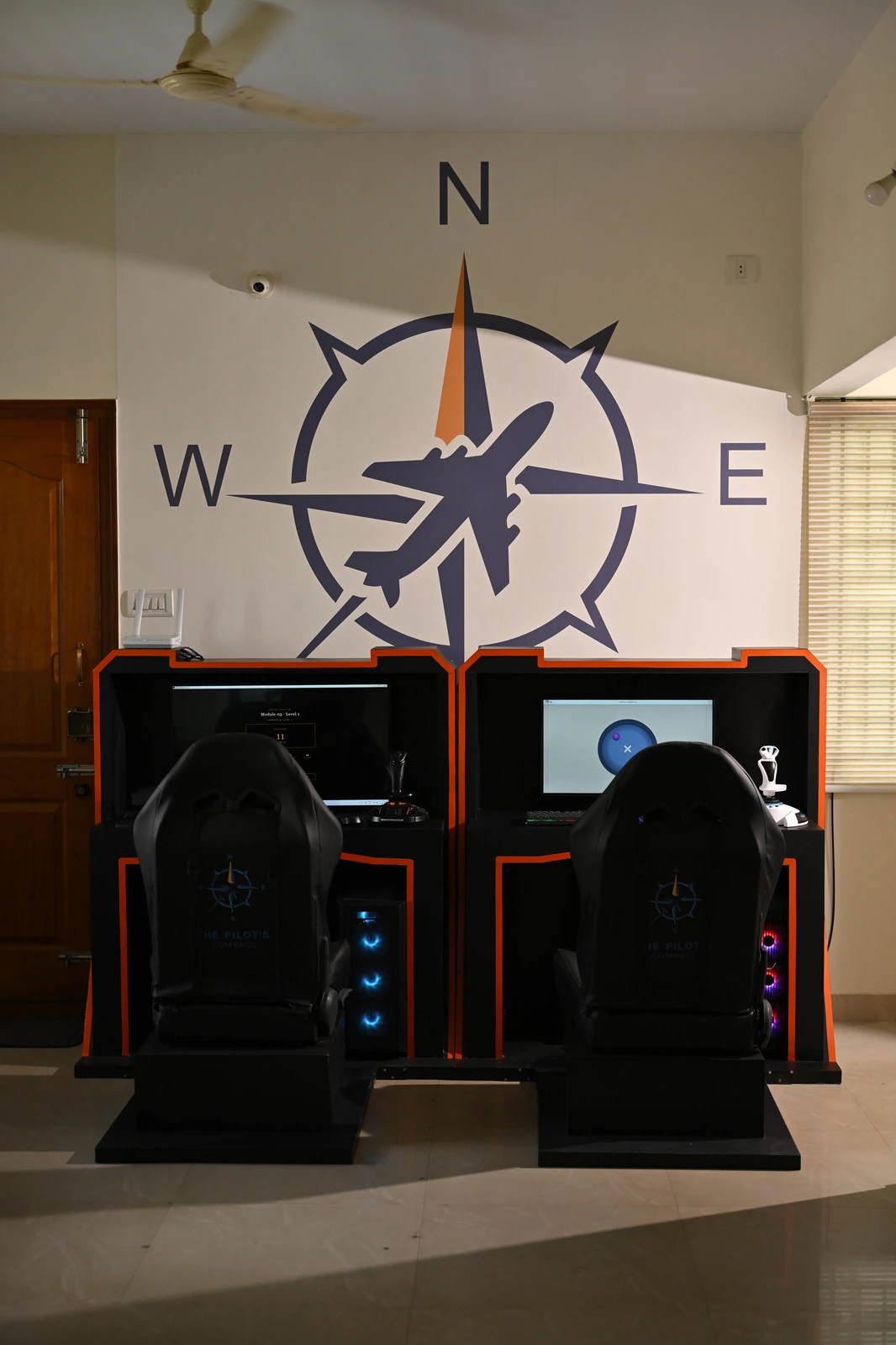
- Coordination: run a basic flight-sim joystick task. Keep a target crosshair centred while answering.
- Personality: answer honestly and consistently. Inconsistent or exaggerated answers tend to show up across a long run of forced-choice questions.
Sample numerical item: An A320 cruises at 420 knots ground speed, 147 nautical miles from the waypoint.
420 ÷ 60 = 7 nm per minute. 147 ÷ 7 = 21 minutes. Do it in your head, under 30 seconds.
A supervised mock on a recognised aptitude-prep platform is generally more useful than free online quizzes. Our CPSS and pilot-aptitude prep guide covers the drill structure, and our ADAPT test preparation guide goes deeper on each module, group discussion topics and interview questions.
What the IndiGo Cadet Pathway Costs (2026)
This is self-funded airline training. Budget for the whole pathway, and remember the components differ by partner academy, so build against your chosen partner's current fee schedule rather than a single blended number.
| Cost component | Dated 2026 estimate |
|---|---|
| CPL / ab-initio training at the partner FTO | ≈ ₹55–65 lakh, usually staged across installments (CAE/NFTI routes have been reported near ₹58 lakh) |
| Living, accommodation and incidentals (about 18–24 months) | ≈ ₹5–8 lakh |
| A320 type rating (post-CPL) | ≈ ₹30–35 lakh (about US$31,500 plus local taxes) |
| Indicative all-in (typical partner routes) | ≈ ₹90 lakh – ₹1.1 crore |
Across all current IndiGo partner routes the all-in figure runs roughly ₹85 lakh to ₹1.3 crore depending on the partner academy, the intake and when the type rating is added; some partner routes have been reported in the ₹70 to 94 lakh range. Where a partner quotes a lower or higher headline, the difference usually sits in the CPL fee and the living span, so compare them line by line.
These are 2026 market estimates compiled from IndiGo partner-academy fact sheets and flying-school quotes, not official prices. The type-rating fee is often quoted in US dollars; the ₹ figure here converts about US$31,500 at an assumed rate of ₹100 per US$ as of 2026, so local taxes and any exchange-rate movement change the total. Confirm the current fee schedule and installment plan with the partner before committing.
See our dated real cost of CPL training in India and education-loan options for pilot training to plan funding.
Is the IndiGo Cadet Program Right for You?
A plain reality-check before you commit.
It fits you if: you can self-fund roughly ₹1 crore, you want a structured, airline-standard pathway, and you prefer a defined route to an A320 seat over flexibility.
Think twice if: your budget is tight, your medical is unconfirmed, or you have not yet sat an aptitude mock. A conventional DGCA CPL route costs less upfront and keeps your options open. We explain where cadet routes go wrong in why cadet pilot programs fail in India.
Common Mistakes That Fail Cadet Applicants
- Treating ADAPT like a DGCA exam and cramming formulas.
- Writing long division instead of fast visual estimation.
- Ignoring the medical until after selection.
- Trying to game the personality section with inconsistent or exaggerated answers.
- Budgeting for the CPL fee only, then stalling at the type rating.
Compare Your Options Before You Commit
Compare the actual numbers before you decide. Compare DGCA flying schools and cadet routes side by side on cost, fleet and outcomes. If you want a second opinion from a veteran aviator before committing, you can book a counselling call.
The Pilot's Compass is run by military-veteran aviators, and we audit DGCA-approved flying schools. We take no commission from the schools we audit and compare.
Continue Exploring
- ADAPT Test Preparation for the IndiGo Cadet Program
- CPL vs PPL vs ATPL Explained
- DGCA Class 1 Medical Guide
- Real Cost of CPL Training in India
- Why Cadet Pilot Programs Fail in India
References
Last updated: 26 October 2026.
Official Sources
- DGCA: Class 1 medical requirements and CPL licensing rules.
- DGCA Pariksha portal: CPL theory exam schedule and fees.
- DGCA eGCA portal: RTR(A) and pilot licensing records.
- IGRUA: government academy fee reference used for the cost comparison.
Airline and Partner Academies
- IndiGo Cadet Pilot Programme pages and partner-academy fact sheets (CAE/NFTI, Skyborne): programme structure and fees.
Market fee ranges are 2026 estimates compiled from flying-school quotes, not official prices; confirm the current figure with the school/DGCA. The aptitude-assessment name, modules and format, the reported ₹29,500 test fee and the partner cost figures come from public reporting and candidate accounts rather than a primary IndiGo specification, and vary by partner and intake; verify them on your chosen partner's current application.
Frequently Asked Questions
Map Your Custom Pilot Training Pathway
Evaluate your compliance across the 4 major DGCA training gates, select training country routes (India vs. USA/Europe), and estimate your CPL timeline month-by-month.