CPSS Test: Computerised Pilot Selection System
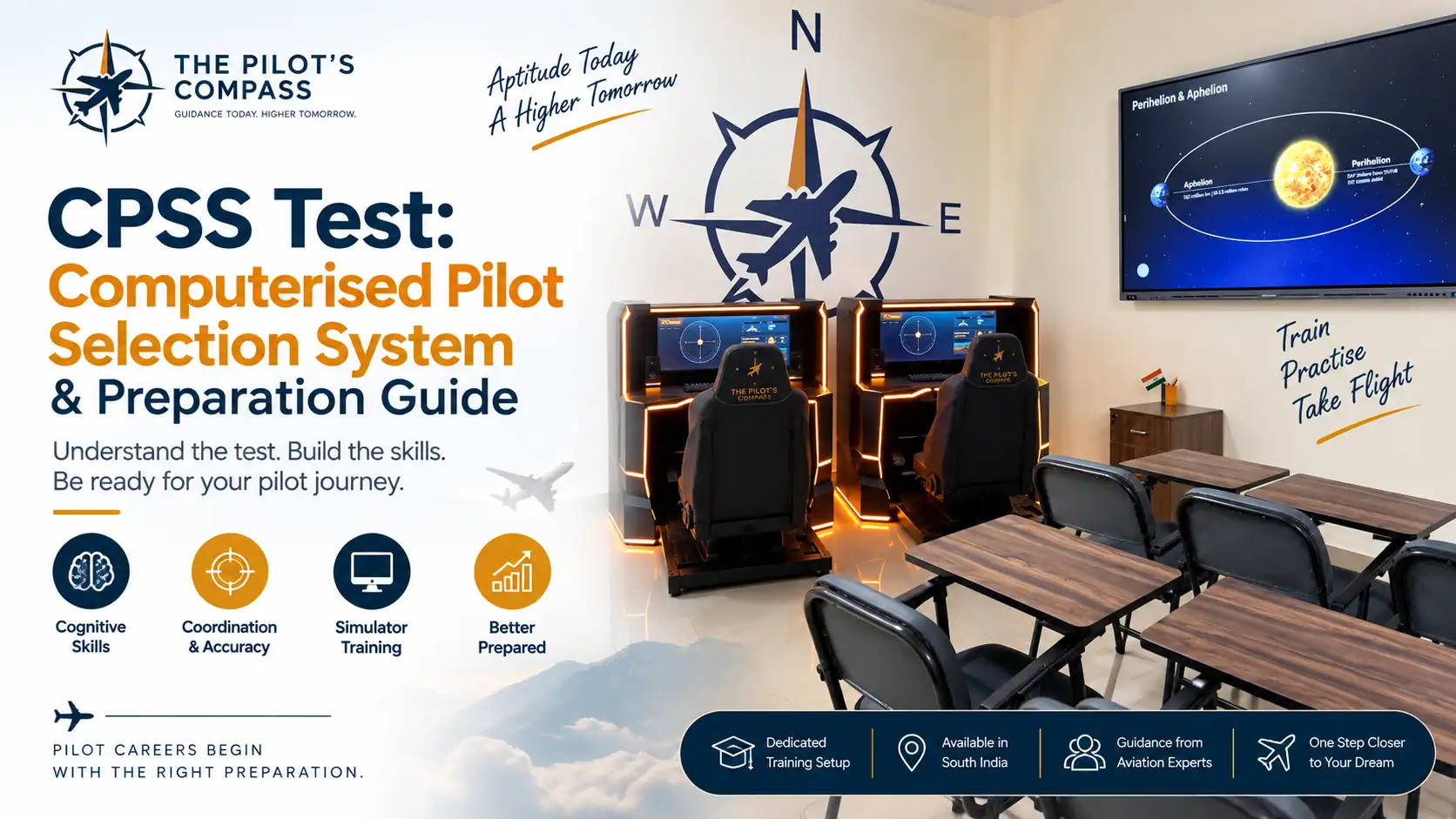
The short version: The Computerised Pilot Selection System (CPSS) is an advanced aptitude assessment developed by DRDO to select military pilots for the Indian Armed Forces. Administered at Air Force Selection Boards (AFSBs), CPSS is a once-in-a-lifetime evaluation of cognitive speed, spatial visualization, and psychomotor coordination. At The Pilot's Compass, we provide dedicated computerised pilot aptitude simulator setups in South India equipped with flight controls and multi-tasking drills, helping aspirants build hands-on familiarity and enter their official assessment composed and confident.
Quick Navigation
- What Is the CPSS Test?
- What Does CPSS Stand For?
- What Does the CPSS Test Assess?
- Why Is CPSS Important for Aspiring Military Pilots?
- CPSS and PABT: What Is the Difference?
- Is CPSS a Once-in-a-Lifetime Test?
- Can You Take the CPSS Test Again?
- How Should You Prepare for the CPSS Test?
- CPSS Simulator Training: Why Practice Matters
- CPSS Simulator Training at The Pilot's Compass
- Where Can Students Access CPSS Simulator Training?
- What Can Students Practise Using a Pilot Aptitude Simulator?
- Watch Our CPSS Simulator Training Facility
- CPSS Preparation vs Regular Pilot Preparation
- Who Should Consider CPSS Preparation?
- Common Mistakes Candidates Make While Preparing for CPSS
- Frequently Asked Questions About CPSS
- Why Choose The Pilot's Compass for Pilot Aptitude Preparation?
What Is the CPSS Test?
The CPSS Test (Computerised Pilot Selection System) is an aptitude assessment engineered by DEBEL under DRDO alongside the Indian Air Force. It evaluates whether an aspirant possesses the innate psychomotor and cognitive attributes needed to fly military aircraft.
Unlike written exams like NDA, CDS, or AFCAT, the CPSS pilot test does not evaluate academic memorization. Instead, it measures how your brain interprets dynamic visual instruments, makes rapid decisions, and executes precise stick-and-rudder inputs.
What Does CPSS Stand For?
CPSS stands for Computerised Pilot Selection System (also written as Computerized Pilot Selection System).
It designates the computerized testing battery used across Air Force Selection Boards (AFSBs) to evaluate candidate flying aptitude for the Indian Air Force, Indian Navy, and Indian Army aviation wings.
What Does the CPSS Test Assess?
According to technical specifications from DRDO, military aviation demands precise human-machine coordination. The CPSS test for Indian Air Force screening evaluates four core competencies:
- Psychomotor Coordination: Smooth control stick and rudder tracking without erratic over-controlling.
- Cognitive Speed: Fast mental calculation and instrument cross-checks under strict time limits.
- Spatial Orientation: Mental interpretation of 3D aircraft attitudes from artificial horizons and compass bearings.
- Divided Attention: Resolving secondary auditory or visual alerts while actively flying primary tracking profiles.
Why Is CPSS Important for Aspiring Military Pilots?
Military flight training requires immense resources, leaving no room for coordination lag. Candidates struggling with spatial orientation face high suspension rates during basic flying training at the Air Force Academy (AFA), Dundigal.
The CPSS provides an objective benchmark to verify innate flight aptitude before formal training begins. Candidates clear their written exam, pass Stage-1 screening at an AFSB, and proceed to this decisive computerized battery.
CPSS and PABT: What Is the Difference?
For decades, the Indian Air Force used the electromechanical Pilot Aptitude Battery Test (PABT). To test candidates for modern glass-cockpit aircraft, DRDO engineered the digital CPSS to replace the legacy system entirely.
| Parameter | Legacy PABT System | Modern CPSS System |
|---|---|---|
| Technology | Electromechanical relays and analog meters | Digital computer terminals by DRDO |
| Cognitive Testing | Paper test booklets | Interactive digital test screens |
| Controls | Mechanical levers, dials, and pedals | Multi-axis flight sticks, throttles, rudders |
| Multi-Tasking | Discrete mechanical tasks | Dynamic concurrent audio-visual tasks |
| Scoring | Manual and semi-automated | Algorithmic tracking and response logging |
| IAF Status | Decommissioned | Mandatory standard across all AFSBs |
Is CPSS a Once-in-a-Lifetime Test?
Yes, the CPSS is strictly a once-in-a-lifetime test.
Official Indian Air Force selection rules mandate that an aspirant receives only one opportunity to take this computerized assessment across their lifetime. Because the system measures innate psychomotor coordination rather than memorized exam tactics, repeating the test would distort baseline readings. If a candidate does not qualify, that decision is permanent for military flying branches.
Can You Take the CPSS Test Again?
No. You cannot retake the CPSS under any circumstances.
Even if you switch entry routes—such as applying through NDA and later through CDS or AFCAT—your CPSS result remains permanently on record. A qualifying score remains valid for future military flying applications. If you do not qualify, you cannot reattempt military flying. Always check current notifications on official UPSC (upsc.gov.in) or IAF (careerindianairforce.cdac.in) portals.
How Should You Prepare for the CPSS Test?
Because the assessment measures neuro-motor coordination and spatial reasoning rather than textbook theory, memorizing answers is impossible. Targeted CPSS test preparation focuses on mental conditioning and motor coordination:
- Spatial Orientation: Practice reading artificial horizons and compass dials to interpret 3D aircraft attitudes.
- Reflex Consistency: Engage in sports, musical instruments, or flight simulator tasks requiring fine motor control.
- Divided Attention: Practice listening to audio cues while resolving visual numerical challenges.
- Briefing Adherence: Follow every instruction given by conducting officers at the AFSB.
- Calm Inputs: Maintain relaxed hands to produce smooth, measured tracking corrections.
CPSS Simulator Training: Why Practice Matters
When candidates enter the testing cabin at an AFSB, they sit before a cockpit setup featuring a visual display, flight stick, throttle, and rudder pedals. Aspirants who have never operated multi-axis flight controls often grip the stick too firmly or over-correct during tracking drills.
Structured CPSS simulator training bridges this familiarity gap:
- Flight Dynamics Familiarity: Understanding how subtle stick deflections alter display cues smoothly.
- Multi-Limb Coordination: Training hands and feet to respond simultaneously and independently to varied inputs.
- Reduced Test Day Anxiety: Experiencing divided cognitive loads on physical controls prevents initial sensory shock.
Important Clarification: Simulator practice does not guarantee qualification in the official CPSS. It provides structured preparation and familiarity with flight control coordination.
CPSS Simulator Training at The Pilot's Compass
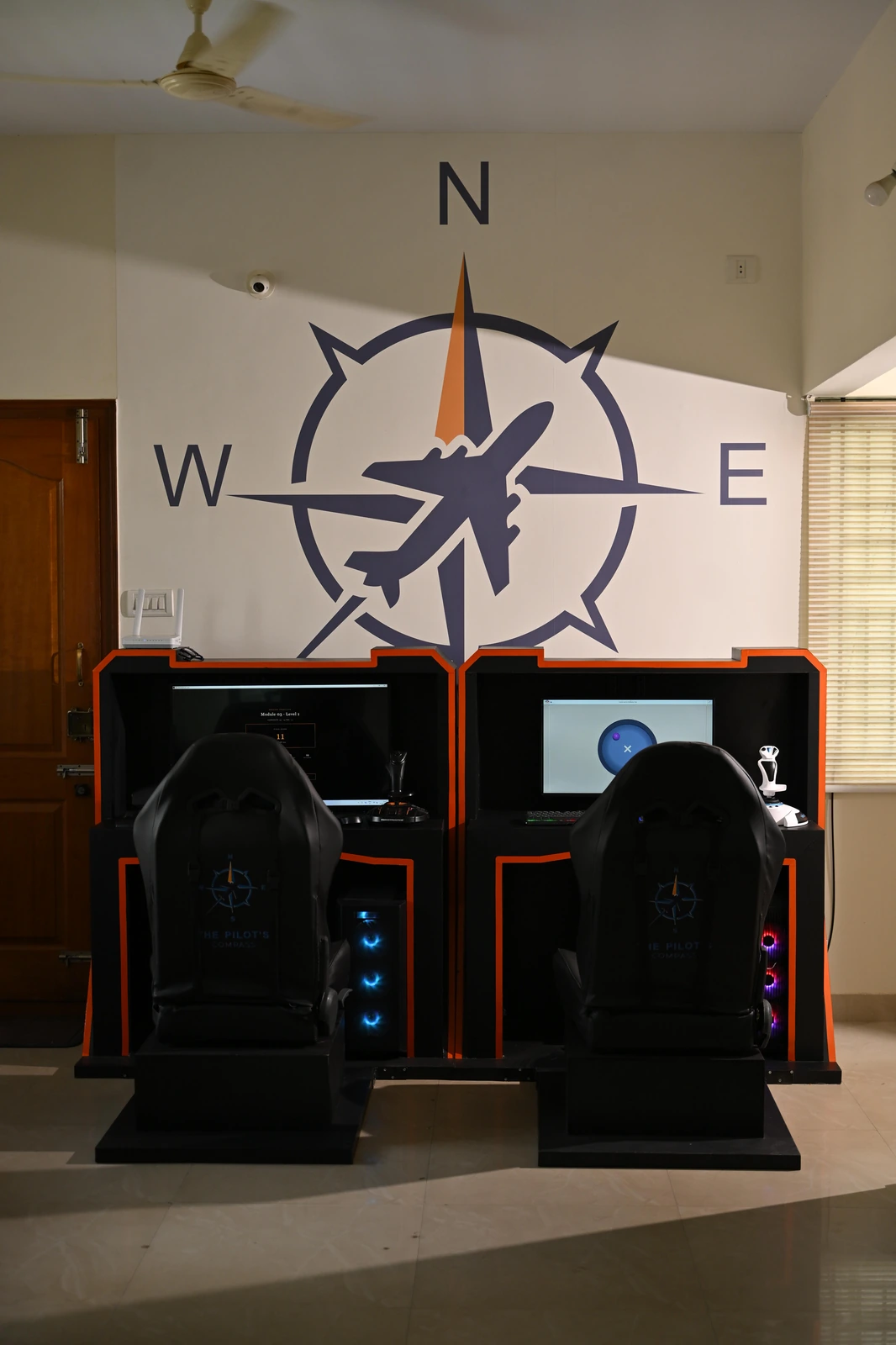
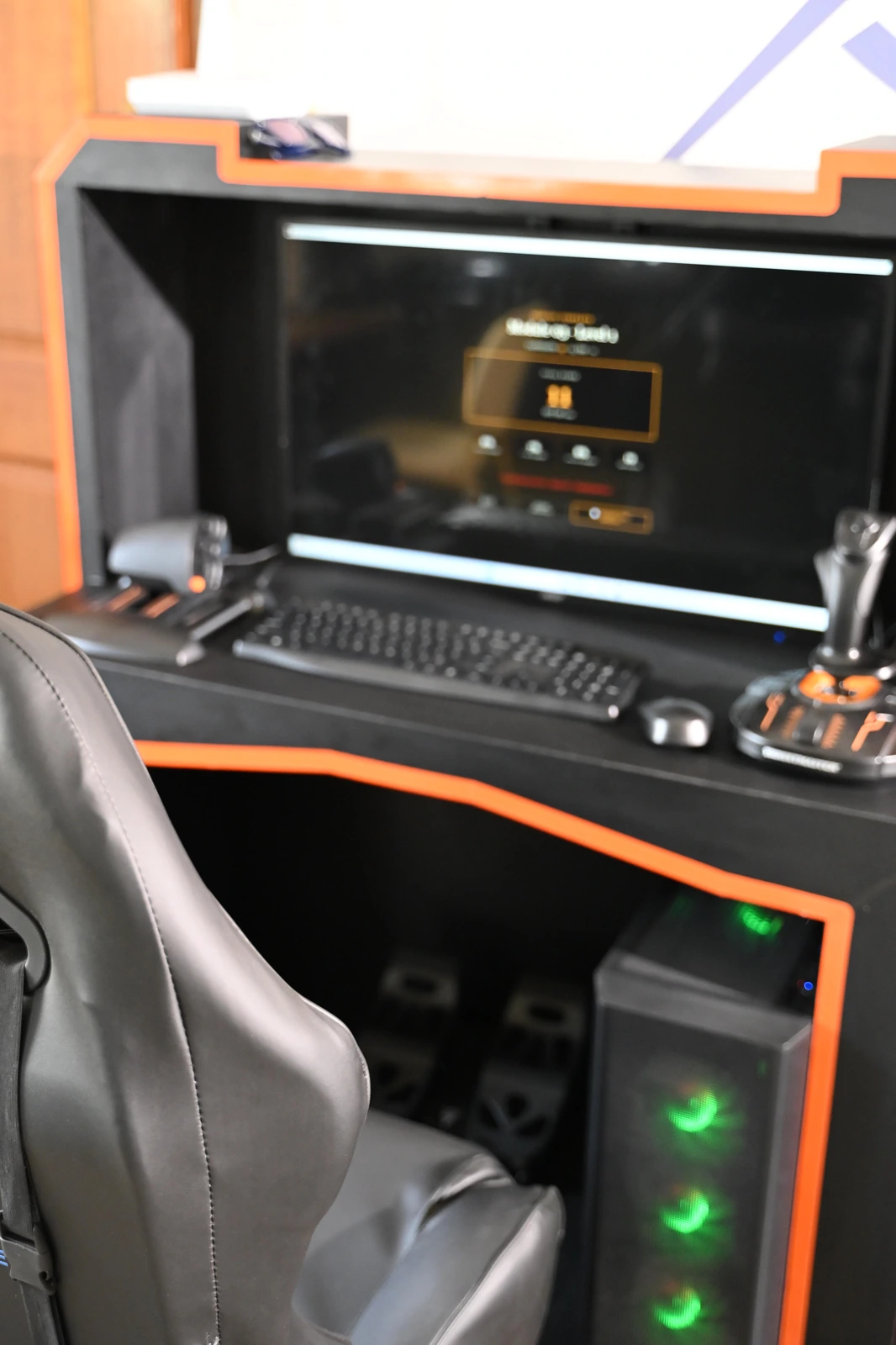
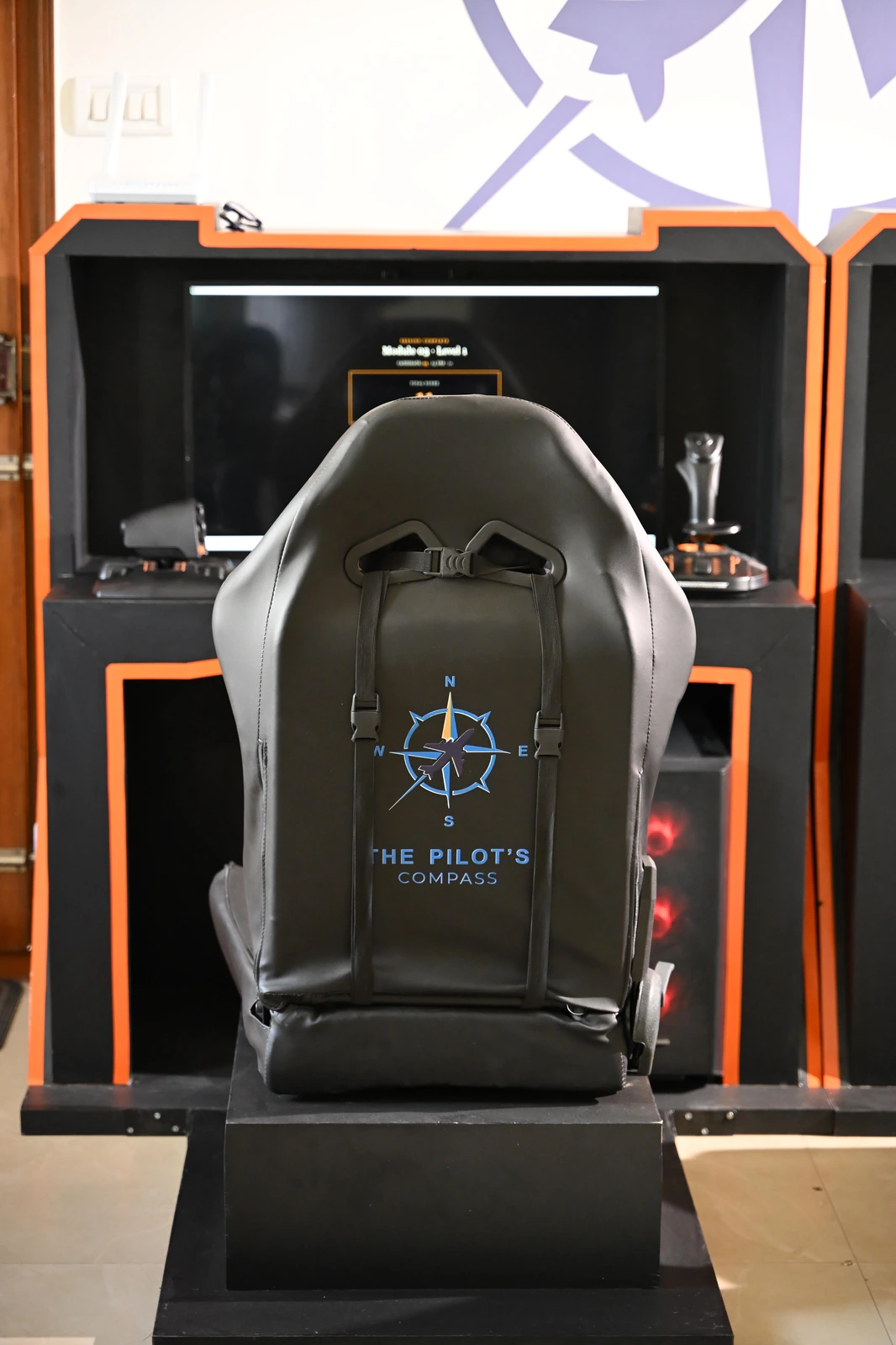
To assist defence aspirants in building control familiarity, The Pilot's Compass operates a dedicated computerised pilot aptitude training facility in South India.
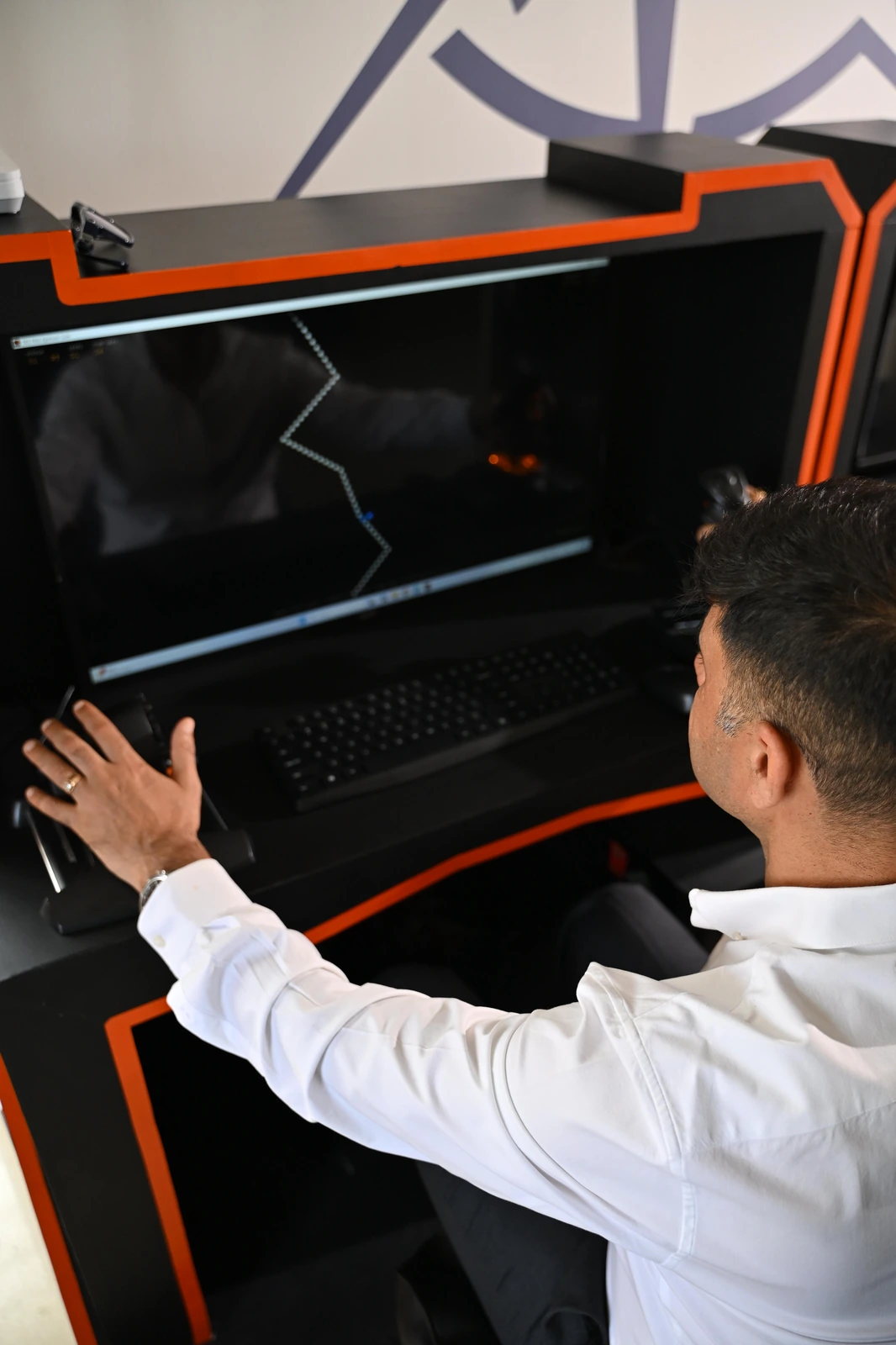
Our training stations incorporate multi-axis flight sticks, rudder pedals, and cognitive exercises designed to reflect the psychomotor challenges of pilot selection testing.
Mentored by Commander Naveen Pandita (Retd.), an Indian Navy veteran aviator with over 23 years of operational flying, our program emphasizes instrument cross-check discipline, smooth stick handling, and composure under divided attention.
Where Can Students Access CPSS Simulator Training?
The Pilot's Compass provides CPSS test preparation in India through our facility located in South India (Yelahanka, Bangalore). This center offers straightforward travel links for aspirants across southern regions:
- Karnataka: Direct local access across Bangalore, close to Jakkur Aerodrome and Kempegowda International Airport.
- Tamil Nadu: Direct rail, road, and air links from Chennai, Coimbatore, Salem, and Madurai.
- Kerala: Regular train and flight connections from Kochi, Kozhikode, and Thiruvananthapuram.
- Telangana & Andhra Pradesh: Frequent express transport from Hyderabad, Visakhapatnam, and Vijayawada.
Aspirants scheduled for AFSB boards, including 2 AFSB (Mysuru), regularly visit our Bangalore center to sharpen their psychomotor reflexes beforehand.
What Can Students Practise Using a Pilot Aptitude Simulator?
Aptitude simulator drills focus on foundational human-machine coordination skills:
- Hand-Eye Tracking: Fine-tuning continuous tracking accuracy with minimal control lag.
- Hand-Eye-Foot Integration: Coordinating foot rudder movements with stick inputs during active tracking.
- Spatial Attitude Recognition: Interpreting pitch, bank, and heading changes from primary flight displays.
- Concentration Under Load: Maintaining task accuracy during extended drills without attention drop-offs.
- Concurrent Task Resolution: Answering auditory prompts while flying specific heading and altitude tolerances.
- Control Discipline: Cultivating measured, steady inputs instead of abrupt over-corrections.
These modules represent training exercises for core pilot attributes and are not an official CPSS question bank.
Watch Our CPSS Simulator Training Facility
Take a look at the computerised pilot aptitude training setup at The Pilot's Compass:
Computerised pilot aptitude training setup at The Pilot's Compass.
CPSS Preparation vs Regular Pilot Preparation
Candidates often confuse civilian aviation ground schooling with military pilot aptitude preparation. They serve distinct purposes in pilot development:
| Training Element | Regular DGCA Ground Training | Pilot Aptitude (CPSS) Preparation |
|---|---|---|
| Core Objective | Mastering civil aviation theory | Evaluating inherent cognitive and psychomotor aptitude |
| Syllabus Content | DGCA CPL Subjects (Navigation, Meteorology, Regulations) | Hand-eye-foot coordination, divided attention, spatial skills |
| Testing Format | Computer-based multiple-choice exams | Computerized simulator tracking and reaction tasks |
| Training Medium | Books, charts, computations, and lectures | Hardware flight sticks, throttles, rudder pedals |
| Attempt Allowance | Multiple quarterly exam attempts permitted | Strictly once in a lifetime for military aviation |
| Target Pathway | Commercial Airline Transport and CPL licensing | Armed Forces Selection Boards (Air Force, Navy, Army) |
While DGCA CPL ground classes prepare students for commercial licensing theory, pilot aptitude training refines personal reaction speed and multi-axis control discipline.
Who Should Consider CPSS Preparation?
Structured pilot aptitude preparation is valuable for several candidate groups:
- NDA Aspirants: Candidates selecting Air Force or Naval aviation preferences who want control familiarization.
- CDS and AFCAT Candidates: Graduates appearing for flying branch interviews who wish to condition multi-tasking reflexes.
- NCC Air Wing Cadets: Direct-entry candidates preparing for their AFSB pilot assessment.
- Aviation Career Planners: Students seeking an objective assessment of their natural flight aptitude through our Pilot Aptitude Test before funding flight training.
Common Mistakes Candidates Make While Preparing for CPSS
Drawing from years of flight instruction, veteran aviators highlight these recurrent preparation errors:
- Treating CPSS as a Theory Test: Memorizing written notes rather than training reflex coordination.
- Neglecting Hardware Familiarity: Relying on paper puzzles without handling physical controls.
- Prioritizing Speed Over Precision: Rushing cognitive questions instead of applying steady, accurate inputs.
- Ignoring Briefing Instructions: Failing to listen carefully to official instructions at the AFSB.
- Over-Controlling the Stick: Applying rigid, forceful inputs instead of smooth fingertip pressure.
- Relying on Selection Guarantees: Expecting secret shortcuts rather than building genuine motor familiarity.
Frequently Asked Questions About CPSS
1. What is the CPSS test?
The CPSS (Computerised Pilot Selection System) is an aptitude assessment developed by DRDO for selecting military pilots in the Indian Armed Forces. Administered at Air Force Selection Boards, it evaluates psychomotor coordination, cognitive processing speed, and concurrent task performance.
2. What does CPSS stand for?
CPSS stands for Computerised Pilot Selection System. It is the official computerized testing battery used by the Indian Air Force to determine whether an aspirant possesses the innate psychomotor and cognitive aptitude required for military flying duties.
3. Who has to take the CPSS test?
Candidates qualifying in preliminary examinations (NDA, CDS, or AFCAT) or direct entry schemes (NCC Special Entry) who pass Stage-1 screening at an Air Force Selection Board must take the CPSS if they have selected the flying branch.
4. What does the CPSS test assess?
According to DRDO specifications, the CPSS evaluates psychomotor coordination, cognitive processing speed, visual spatial orientation, hand-eye-foot coordination, attention allocation, and the ability to execute simultaneous tasks accurately under strict time constraints.
5. Is CPSS a once-in-a-lifetime test?
Yes. Under official Indian Air Force selection guidelines, the CPSS is strictly a once-in-a-lifetime assessment. If a candidate does not qualify in the CPSS, they cannot reappear for the flying branch of the Indian Air Force, Navy, or Army aviation through any entry route.
6. Can I take the CPSS test twice?
No. You cannot take the CPSS test twice. Official IAF policy mandates that every candidate receives only one opportunity to attempt the computerized pilot aptitude evaluation across their entire career. Always check current guidelines in official UPSC or IAF entry notifications.
7. What happens if I fail CPSS?
Failing the CPSS disqualifies a candidate permanently from military flying branches across the Indian Air Force, Indian Navy, and Indian Army. However, candidates remain fully eligible for ground duty, technical branches, or commercial civil aviation via DGCA licensing.
8. How can I prepare for CPSS?
Preparation involves developing mental agility, spatial visualization, divided attention, and psychomotor coordination. Becoming familiar with flight-oriented controls, scanning habits, and rapid information interpretation through structured simulator exercises helps candidates remain composed during the formal assessment.
9. Is there a CPSS simulator for practice?
While the official military CPSS system is proprietary and restricted to AFSBs, specialized aviation academies like The Pilot's Compass offer computerised pilot aptitude training stations. These simulator rigs recreate flight control dynamics, tracking drills, and concurrent cognitive tasks.
10. Where can I get CPSS simulator training in India?
Aspiring pilots can access computerised pilot aptitude training at dedicated aviation training centers. The Pilot's Compass provides a specialized pilot aptitude training facility in South India (Bangalore), supporting candidates preparing for military pilot selection.
11. Is CPSS the same as PABT?
No. CPSS is the modern, fully computerized successor to the legacy Pilot Aptitude Battery Test (PABT). While PABT used electromechanical dials and paper tests, CPSS integrates digital cognitive testing with computerized psychomotor flight controls.
12. Is CPSS required for commercial pilots?
No. The CPSS is strictly a military pilot selection system for the Indian Armed Forces. Commercial pilots follow the Directorate General of Civil Aviation (DGCA) licensing framework, requiring Class 1 medicals, written theory exams, and flight training at an approved civil flying school.
13. Can NDA candidates appear for CPSS?
Yes. Candidates qualifying in the UPSC NDA written examination who select Air Force or Naval aviation preferences and obtain recommendations during Stage-1 screening at the AFSB appear for the CPSS.
14. Can AFCAT candidates appear for CPSS?
Yes. Candidates qualifying through the Air Force Common Admission Test (AFCAT) for the flying branch are scheduled for CPSS at designated AFSBs after clearing Stage-1 testing, provided they have never attempted CPSS or PABT previously.
15. Does simulator training guarantee CPSS qualification?
No. Simulator or aptitude practice does not guarantee qualification in the official CPSS. Training is designed to develop familiarity with computer-based controls, reduce cognitive shock, and build hand-eye coordination before the actual military test.
16. Where is CPSS simulator training available in South India?
The Pilot's Compass provides a dedicated computerised pilot aptitude training setup in South India (Bangalore), easily accessible to candidates from Karnataka, Tamil Nadu, Kerala, and Telangana/Hyderabad.
Why Choose The Pilot's Compass for Pilot Aptitude Preparation?
Preparing for pilot selection benefits from genuine mentorship by experienced aviators who know cockpit demands firsthand:
- Dedicated Computerised Setup: Practical training stations equipped with flight sticks, throttles, and rudder pedals to condition motor reflexes.
- Veteran Aviator Mentorship: Mentorship led by Commander Naveen Pandita (Retd.) and veteran military aviators who have flown frontline missions.
- Individual Coordination Feedback: Diagnostic assessments of hand-eye coordination, spatial awareness, and divided attention with actionable guidance.
- End-to-End Pilot Mentorship: Beyond aptitude coaching, we guide candidates through commercial pilot pathways, airline cadet screening, and DGCA ground classes.
Take the Next Step in Your Flying Career
If you are preparing for a military pilot selection pathway and want to build familiarity with computerised flight aptitude exercises, connect with The Pilot's Compass for structured training.
Explore our Pilot Aptitude Test Training or Book a Consultation Session with our flight mentorship team today.
Map Your Custom Pilot Training Pathway
Evaluate your compliance across the 4 major DGCA training gates, select training country routes (India vs. USA/Europe), and estimate your CPL timeline month-by-month.