
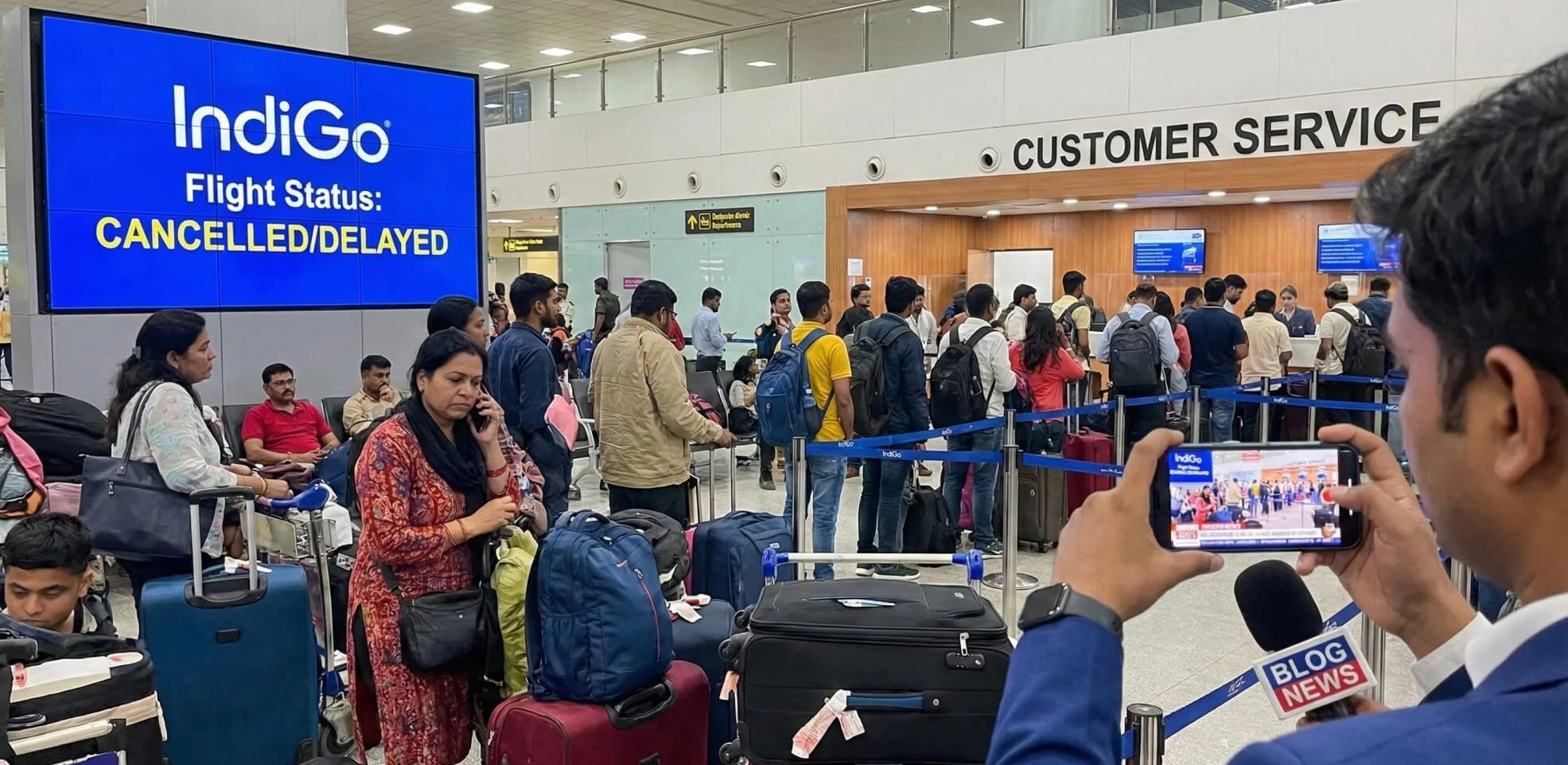
Why This Chaos is Your Career's Green Light?
If you're currently training to be a pilot in India, the recent headlines about IndiGo—the flight cancellations, the frustrating delays, the noise—probably made you flinch. It feels chaotic, messy, and maybe even a little scary.
But let's be brutally honest and reassuring: This entire "fiasco" is less of a warning and more of a giant, flashing neon sign that the industry is desperate for you.
This drama is a structural symptom of India's enormous, unaddressed pilot shortage. For the next generation of aviators (that's you!), this crisis is the industry being forced to throw open its doors and offer better terms.
Part 1: Wait, Why Did IndiGo Suddenly Melt Down? (A Safety Checkmate)
The recent wave of operational meltdowns at IndiGo wasn't due to a sudden technical glitch. It was a perfect storm created when poor corporate planning ran head-first into non-negotiable safety rules.
1. The DGCA's Non-Negotiable Deadline
The core trigger? The full implementation of the Directorate General of Civil Aviation (DGCA)'s new Flight Duty Time Limitation (FDTL) norms on November 1st, 2025. These rules exist for one beautiful reason: to prevent pilot fatigue.
- Mandatory Rest: Your weekly rest period significantly jumped (from 36 hours to a luxurious 48 hours).
- Night Shift Limits: They also placed a tighter cap on night operations. Because let's face it, no one performs their best when they're running on fumes and lukewarm coffee.
2. The Core Airline Miscalculation (Ouch)
Pilot bodies have strongly suggested that the airline was playing a risky game of human resource chicken:
- The "Running on Fumes" Strategy: For years, IndiGo built success on hyper-efficiency, keeping their pilot-to-aircraft ratio razor-thin. They were running their operations like a Formula 1 team, where a single flat tire derails the entire race.
- The Waiting Game: Despite having a two-year preparation window to staff up for the FDTL changes, they allegedly adopted a hiring slowdown. They didn't recruit or train enough pilots in time to meet the new, increased rest requirements.
The Outcome: The moment the new safety rules took effect, that stretched roster instantly became illegal. Hundreds of flights had to be canceled because, well, the airline literally ran out of rested, compliant crew. You can't argue with the DGCA's sleep schedule.
Part 2: Your Silver Lining—Why This is Fantastic News
For the aspiring pilot, this mess is not a sign of failure. It is proof that the industry is structurally starved for talent and must now change its ways to survive.
| Implication for the Industry | Why It's Your Golden Ticket |
|---|---|
|
Forced Hiring Spree IndiGo and competitors must staff up aggressively to comply with safety rules. |
This means an immediate and sustained surge in hiring for new pilots. Get your CV ready! |
|
Record Fleet Orders With fleets doubling (thanks to massive orders from IndiGo and Air India), the industry needs to double its current pilot strength over the next decade. |
The jobs are, quite literally, guaranteed. |
|
Structural Shortage The new FDTL rules permanently increase the number of pilots needed per aircraft. |
This isn't a temporary spike; it's a new, permanent baseline for talent demand. |
|
Better Quality of Life The DGCA's firm stance means the future working environment will prioritize rest and fatigue management. |
Your career will be safer, healthier, and far more sustainable than what the previous generation had to face. |
|
Improved Pay Leverage Airlines are compelled to offer better compensation packages and retention investment. |
Your skills are now in the power seat. |
The Reality Check (Because We're All Adults Here)
While the demand is enormous, don't expect the line to the cockpit to vanish overnight.
- CPL is the Start: Yes, the need for fresh Commercial Pilot License (CPL) holders is very high.
- Patience is a Virtue: The real bottleneck is Type-Rated First Officers and Captains. Getting your aircraft-specific type rating and becoming line-ready still takes time (think months to a year).
- Training Congestion: The industry needs to build out its training infrastructure quickly. Be patient, as those training pipelines might get congested as everyone scrambles to catch up.
Conclusion: Your Time to Fly
The IndiGo event was a dramatic, yet ultimately positive, inflection point. It exposed a weakness in corporate accounting but simultaneously revealed the unshakeable, frantic demand for pilots in India.
Focus on your training, maintain a clear safety record, and enter the sector knowing that your unique skills are desperately needed. Your career path, though challenging to start, looks stronger, brighter, and more secure than ever before.
Map Your Custom Pilot Training Pathway
Evaluate your compliance across the 4 major DGCA training gates, select training country routes (India vs. USA/Europe), and estimate your CPL timeline month-by-month.