
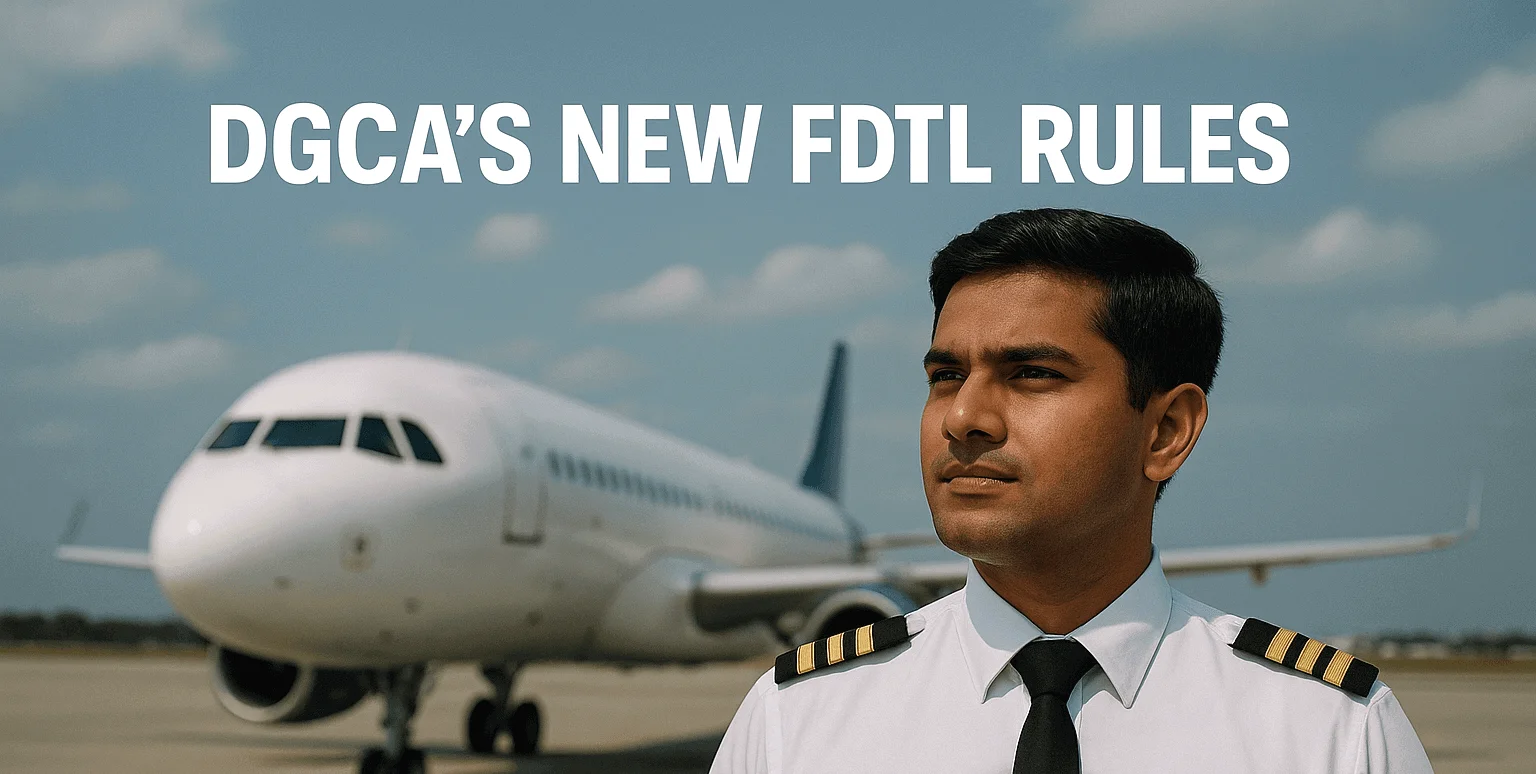
How New FDTL Rules Are Reshaping the Lives and Careers of Indian Pilots
Indian aviation has always been a beacon of ambition and expansion, but 2024 marks a real transformation. Thanks to the DGCA's new FDTL rules 2024, Indian skies aren't just getting busier—they're getting safer.
But what does this really mean for pilot careers in India , and for anyone dreaming of a cockpit career?
What Exactly Changed in 2024?
Flying is demanding, and pilot fatigue is one of the most serious challenges—especially on late-night red-eye sectors. Recognising this, the Directorate General of Civil Aviation (DGCA) didn't simply tweak the system. It overhauled India's flight duty time limitations, aligning with global aviation safety standards.
Highlights of the new DGCA FDTL norms:
- Mandatory weekly rest increased from 36 to 48 hours
- Night duty now extends until 6 am
- Maximum landings per night cut from 6 to 2
- Night flying hours reduced from 13 to 8
- Maximum duty period cut from 13 to 10 hours
These changes put India firmly in line with international fatigue management norms.
Why Do These Rules Matter?
This isn't regulatory jargon. These reforms are grounded in science and best practices. They directly address pilot exhaustion, which is a major contributor to in-cockpit errors.
By rewriting duty limits, the DGCA is betting on:
- Higher aviation safety
- Better pilot well-being
- Increased passenger confidence
- Sustainable long-term work conditions
The new norms aren't just about reducing risk—they're about building a stronger, more resilient Indian aviation ecosystem.
A Job Market in Overdrive: The Hiring Surge
Here's where things get interesting.
With pilots flying fewer hours under the new rules, airlines now need significantly more pilots to run the same schedule. This has triggered a massive wave of pilot recruitment in India; the biggest the industry has ever seen.
- Experts estimate a 20–25% increase in pilot demand
- Airlines now require 1.2 to 1.25 pilots for every pilot rostered under the old system
- Demand isn't just for fresh CPL holders—it's for Captains and First Officers
This is a hiring boom driven directly by DGCA's FDTL changes, not just fleet expansion.
Airlines Are Racing to Recruit
The Indian pilot job market looks like a runway at rush hour. The airlines are gearing up and expediting pilot hiring processes across India. With some recruiting international pilots even. Pilot training pipelines are being extended and we can see that CPL graduates in India have more opportunities than ever. On the other hand, the crunch for experienced Captains is unprecedented. Without a doubt, this is the most promising hiring phase Indian aviation has ever witnessed.
The Numbers: India's Next Great Pilot Hiring Boom
The combination of FDTL reforms and airline fleet expansion is creating a surge in demand that India has never experienced.
| Metric | Projection | Context |
|---|---|---|
| Short-term demand (2024-26) | 7,000+ new pilots | Immediate impact from FDTL and new aircraft deliveries |
| Total need (next decade) | 35,000 to 40,000 pilots | Ongoing fleet growth and replacement of retirees/attrition |
| Metric | Requirement/Projection | Context |
|---|---|---|
| Workforce growth rate | Required to double | Pilot demand expected to double in next 5 years |
| Annual new pilots needed | 1,500–2,100 per year | Excluding FDTL-driven surge |
Airline-specific estimates:
- IndiGo: 11,000+ pilots over the next decade
- Air India Group: 5,800+ required (including Vistara merger)
- Air India Express: 2,196+ pilots by 2028
These are the biggest-ever numbers in Indian aviation history.
Is This a Good Time to Become a Pilot?
Absolutely—yes.
The combination of new DGCA FDTL norms, soaring demand, and nationwide fleet expansion makes 2024–2030 the best time to become a pilot in India.
For aspirants:
There's never been a better or safer time to join this career. The norms bring career stability and promotions and seniority will accelerate due to shortages. Airlines are offering more structured training and better contracts.
For airlines:
This hiring wave is challenging but it's also a chance to build stronger, safer, well-rested crews.
The Key Takeaway
DGCA's new FDTL rules didn't just make flying safer—they've created India's biggest-ever opportunity for new pilots. The skies are calling, and the best time to answer is now.
Map Your Custom Pilot Training Pathway
Evaluate your compliance across the 4 major DGCA training gates, select training country routes (India vs. USA/Europe), and estimate your CPL timeline month-by-month.